FAQ About Raising Backyard Chickens
Get the answers to some common urban chicken raising questions.
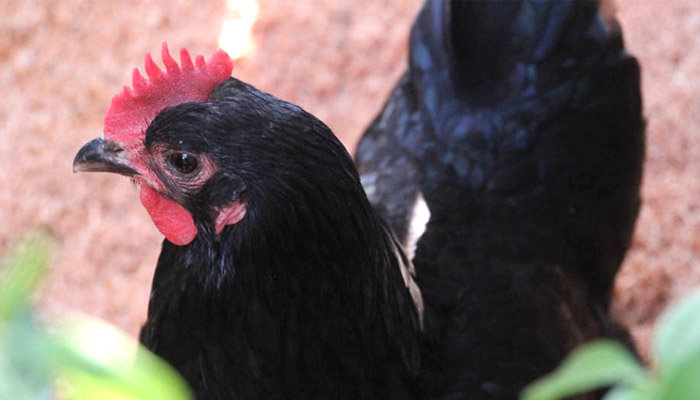
Photo: Morgan Spenla
For several years we had the pleasure of sharing our small plot of city land with two lovely little hens. We called them our urban chickens and they were as good as pets. Though we eventually had to give our little flock (can you call two a flock? They were birds of a feather that stuck together, if that counts!) to friends, we did enjoy a few years of having them as part of our family.
We were very green farmers when we first started out! We loved the idea of farm fresh eggs at our back door and after learning that we could have urban chickens in San Diego, we quickly found a farm just outside of the city that sold us three four-month-old chickens.
For fellow (or future) urban farmers out there, here's my take on a few frequently asked questions:
1. Why four-month-old chickens and why three?
Chickens start to lay at six months, so starting with chicks (while adorable) means that you're dedicating quite a bit of time to raising before collecting any eggs. Four-month-olds have enough time to acclimate to their new environment before laying.
Three is the ideal number. Chickens should to live in a group (two being the smallest group), so if something should happen to one, you would still have two. We city folk accidentally returned one of our hens because of her morning crowing (we thought she was a rooster, you can't tell at four months). Eventually we realized that she really was a she when we stopped collecting white eggs (the other two laid brown eggs) and that she was just the dominant female of the bunch. Apparently they crow!
Photos: Morgan Spenla
2. What did their home look like?
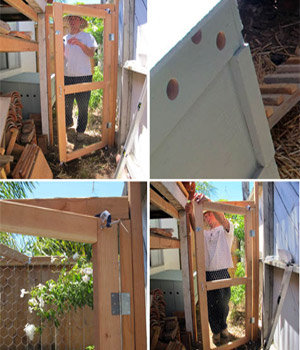
Their full coop was at the back of our property and about 5 feet-by-7 feet in size. My husband also built a small nesting box for them to lay in and we added a roosting bar to one corner (birds will always choose to sleep high for fear of predators). The bottom of the coop was lined with wood shavings (non-treated wood, not the type of shavings you might find at Home Depot) and their box was lined with hay.
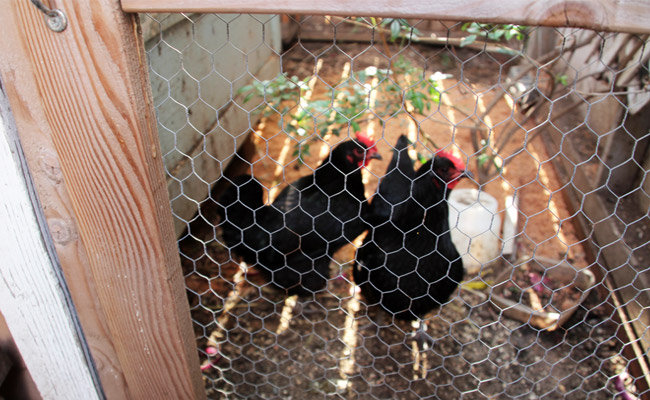
Photo: Morgan Spenla
3. Where did you find your feed and hay supply?
We sourced both of these from the outlying San Diego feedshops (the nearest being a half hour from our home). But we recently found out there are quite a few city farmers in our neighborhood! Now our local pet store happily orders and delivers all of the supplies we need. I would recommend anyone considering chickens reach out to their local pet supply store to see if they can have chicken feed added to their delivery order (even if just for you).
4. Did you have to deal with rodents or bugs?
Yes, both. We eradicated all of the above within the first few months of the hens moving
in and haven't had an issue since, but it was definitely not fun to learn how to fend off non-feather friendly creatures. Diatomaceous Earth was very helpful.
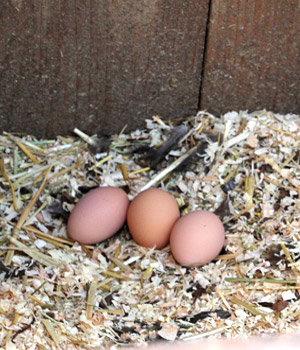
Photo: Morgan Spenla
5. Did you add any supplements to their food?
Our chickens received a lot of delicious fruit and veggie scraps. I think that has a ton to do with how delicious their eggs were. After a little research I began adding ground up oyster shells (also from our pet store) to the mix for extra strong eggshells.
6. How much did they cost to raise? Was it worth it?
Truth be told, the cost of caring for these ladies was about equal to the price you'd pay for free range eggs at the supermarket. You have to love the idea of caring for and growing your own food to be a full-fledged chicken farmer. Or, invest in more than two hens and share the wealth with friends and neighbors. We considered expanding the flock to six considering that it's probably about the same amount of work.
7. What's one thing that really surprised you?
We didn't realize that hens take a break from laying during winter to more permanently roost or brood. The newbies that we were, we couldn't figure out why the ladies suddenly stopped producing so frequently November through February! Many backyard farmers add heat lamps or lights to extend the daylight that chickens receive during the winter so that they'll continue to lay, but we went au naturale. We all need a break now and then.
8. Why did you have to give them away?
We love our relationship with our neighbors and when we heard that there was some discomfort of having chickens so close by we decided to let friends of ours (who have a real flock!) continue to raise them. It was sad to say goodbye after several years but we can visit whenever we'd like.
You can read more about our chicken escapades here!
