What Is Damask Fabric? Weave, History, and Uses
Learn about this timeless design.

Damask is a reversible fabric with a symmetrical pattern woven directly into the cloth. The design combines a luxurious satin weave motif with a sateen weave background, creating a subtle sheen and dimensional texture. Named after Damascus – the Silk Road trade hub that introduced the textile to Europe – damask fabric brings timeless elegance and dependable structure to your home interior. Read on to learn more about this timeless pattern and its rich history.

Damask fabric is an intricately woven, reversible textile characterized by stylized, symmetrical patterns. Because the motif is formed by shifting the direction of warp and weft threads rather than applying surface pigment, the pattern appears on both sides of the cloth with reversed color and sheen. Originally woven entirely by hand, modern damask is woven on specialized Jacquard looms that reproduce its elaborate motifs with speed and precision.
Characteristics of Damask Fabric
- Woven, Not Printed: The pattern is woven directly into the weave rather than stamped or printed onto the surface.
- Fully Reversible: Because the design relies on thread interplay, the pattern is clearly reflected on both the face and reverse sides of the textile.
- Satin & Sateen Sheen: The combination of warp-faced satin for the motif and weft-faced sateen for the background gives the pattern a gentle sheen, crisp contrast, and a slightly raised, dimensional look.
- Tight, Substantial Weight: Damask uses multiple layers of tightly packed threads, producing a dense, heavy drape that resists everyday wear.
- Versatile Fiber Composition: Historically spun from pure silk, wool, or cotton, damask is also widely available in linen and synthetic fibers for modern durability and ease of care.
- Symmetrical Motifs: Traditional damask patterns draw inspiration from nature, showcasing balanced botanicals, stylized florals, fruit medallions, and scrolling acanthus leaves.
Neighborly Tip!
Read our Guide to the Types of Fabric Patterns for a more in-depth look at every option.
Why Is It Called Damask?
The name "damask" traces back to Damascus, Syria, an essential commercial port along the ancient Silk Road. This intricate weaving technique first emerged in China, but merchants in Damascus became renowned for trading the ornate silk textiles. Italian and French weavers began producing their own versions of the pattern by the 14th century, adopting the name "damask." Today, "damasked" is also used as a descriptive term for any cloth woven with this distinctive reversible contrast.
Neighborly Tip!
Explore our Guide to the Types of Fabric Patterns for a helpful visual guide to classic motifs and textile styles.
Damask vs Brocade vs Jacquard
| Weave | Pattern | Reversible | Home use |
|---|---|---|---|
| Damask | Woven, slightly raised | Yes | Chairs, drapes, bedding |
| Brocade | Embossed, often metallic | No | Accent upholstery |
| Jacquard | Loom for many weaves | Depends on weave | Broad home textiles |
Damask
Damask features a tight, durable weave that produces a slightly raised, reversible pattern. It is traditionally created with a single hue to let the satin-sateen contrast catch the light, though multicolored iterations are also common in contemporary interiors.
Brocade
Brocade is an ornate, non-reversible fabric woven with supplemental weft threads that give it a heavily embossed, tapestry-like appearance. Often incorporating metallic gold or silver threading, brocade has a looser weave structure with loose threads on the underside, making it best suited for decorative accent upholstery rather than high-traffic daily seating.
Jacquard
Jacquard refers to the mechanical loom attachment invented by Joseph Marie Jacquard in 1804. Using a series of punched cards (and today, computer programming), the Jacquard loom individually controls thousands of warp threads, allowing weavers to produce complex, non-repeating textile designs – including damask, brocade, matelassé, and tapestry.
Damask vs. Brocade
While damask first flourished in aristocratic apparel, it has long been a staple in interior design. Its balanced geometry and tactile sheen pair seamlessly with contemporary furniture, warm wood tones, and modern textures for an intentional, layered aesthetic.
Upholstery
The high thread count and resilient structural integrity of damask upholstery makes it a luxurious and durable option for furniture. The dense, tight weave resists sagging, snagging, and surface abrasion, making it an excellent investment for statement seating like dining chairs, formal sofas, and accent chairs.
Drapes
Thanks to its heavy weight and dense thread count, damask provides exceptional light filtration and natural thermal insulation when used as a window treatment. Floor-length damask drapes introduce rich vertical texture, elegant symmetry, and dramatic architectural presence to living rooms and primary bedrooms alike.
Wallpaper
Damask translates beautifully onto a large architectural scale. Damask wallpaper brings depth and elegance to accent walls, powder rooms, dining spaces, or primary suites, lending an air of classic European charm without overwhelming the eye.
Bedding & Sheets
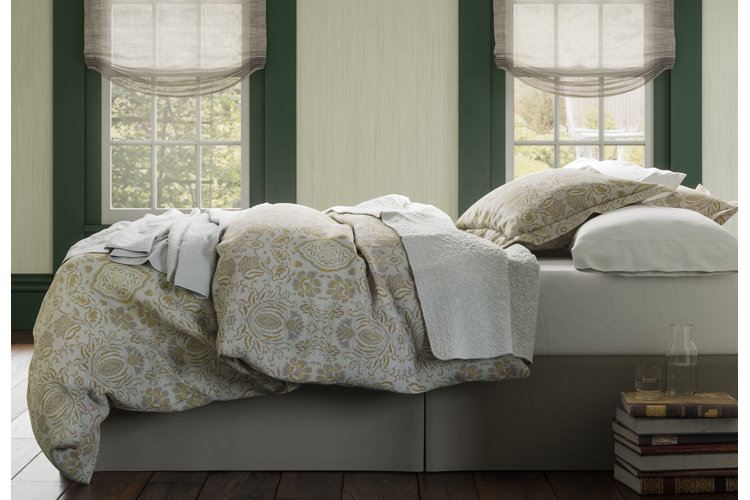
On bed linens and sheets, damask provides a soft, breathable, and reversible pattern that will never peel or wash out. Incorporating woven damask duvet covers, shams, throws, or accent pillows instantly layers dynamic visual depth into a neutral bed setup.
Frequently Asked Questions
What is damask?
Damask is a reversible fabric with a symmetrical pattern woven into the cloth. The design uses a satin weave and the background uses sateen, so the motif looks slightly raised and has a sheen.
Why is it called damask?
The name comes from Damascus. The cloth moved from ancient China through that Silk Road city and reached Europe in the 14th century.
What is the difference between damask and brocade?
Damask is a tighter, reversible weave with a flatter raised pattern. Brocade is usually more embossed, often uses metallic thread, and the pattern shows on one side.
What is the difference between jacquard and damask?
Jacquard is the loom that weaves complex patterns. Damask is one fabric that loom produces. Brocade is another.
What does damask mean in sheets?
On sheets, damask means the floral or scroll pattern is woven into the cloth rather than printed on top. The same weave shows up in duvet covers, shams, and throws.
What is damask fabric used for?
At home, damask is used for upholstery, drapes, wallpaper, bedding, and shower curtains. The tight weave is a common choice for chairs and window panels.
