What Is a Lazy Susan?
Don't be fooled – this household helper is anything but lazy.
Are you tired of having your meals interrupted by requests to pass the salt or sugar? Could you use some help hosting your next dinner party? Say hello to lazy Susan, a household helper that's much more hardworking than its name suggests. Read on to learn what is a lazy Susan.
In this guide:
What Is a Lazy Susan?
History of the Lazy Susan
What Is a Lazy Susan Made Of?
Frequently Asked Questions
What Is a Lazy Susan?
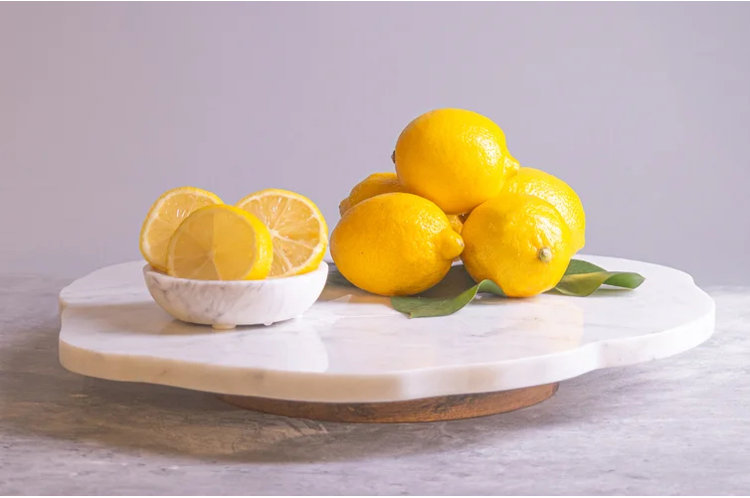
A lazy Susan is a revolving tray typically used for serving food, condiments, or relishes. Also called a turntable, a lazy Susan makes table service simple. It sits on a table or countertop, giving multiple people access to its contents without having to pass items or reach across the table. A lazy Susan can also be used in a cabinet to provide a rotating, space-saving storage system.
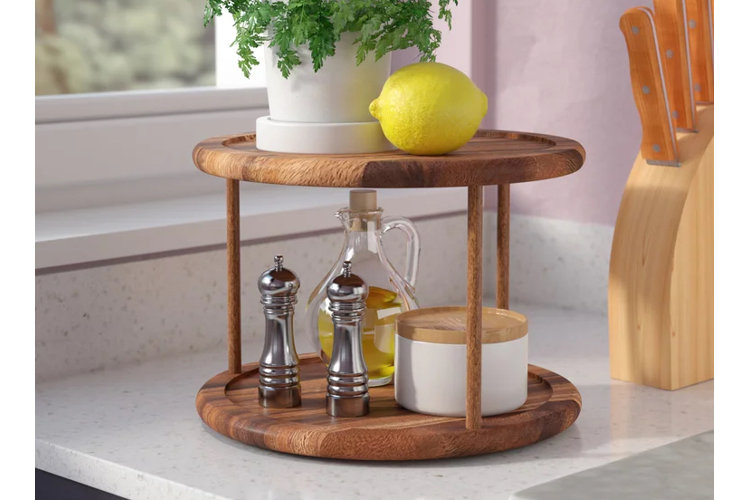
Many lazy Susans have a single tray, but multitiered models can hold even more items and maximize vertical space on your table or in your pantry. Lazy Susans are usually round, with common sizes ranging from 12 to 48 inches.
History of the Lazy Susan
These handy turntables have been around in some form for centuries, though not with their current moniker. Revolving tables were first used in 13th-century China, and they became popular in 1960s-era American Chinese restaurants as a “hygienic dining tray."
The lazy Susan may have also evolved from the 18th-century English dumbwaiter, which was a portable serving table or stand. If homeowners didn't have household servants to refill their drinks or deliver condiments, a dumbwaiter was the perfect stand-in.
So, why is it called a lazy Susan? That era may also explain how it got its name. In the 1700s, homeowners used the generic name “Susan" to refer to their female servants. And since employers routinely complained about servants' laziness, “lazy Susan" became a common term.
At the very least, we know the name has been around for the last century because an ad in the December 1917 issue of Vanity Fair featured a mahogany tabletop tray with the following description: “$8.50 forever seems an impossibly low wage for a good servant; and yet here you are; Lazy Susan, the cleverest waitress in the world, at your service!"
What Is a Lazy Susan Made Of?
Lazy Susans can be made from many different materials, including marble, stainless steel, and aluminum, but the most popular turntables are made of wood, plastic, or glass. Choose from a variety of colors and styles to accent your space.
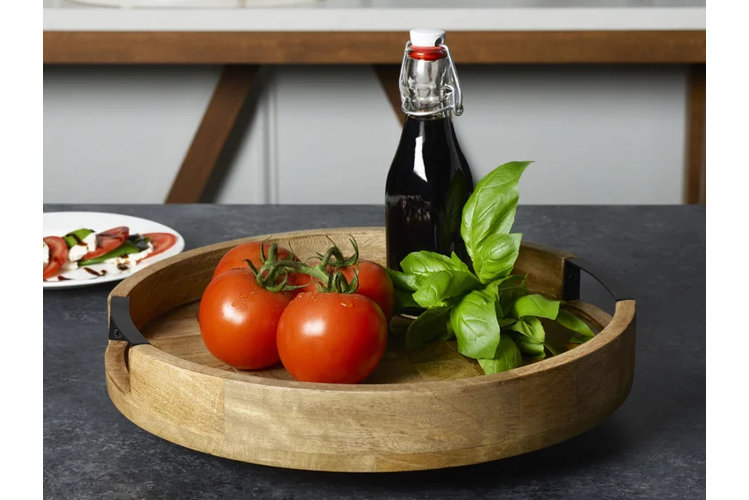
Wood: Wood is the most common material for lazy Susans, with turntables made of acacia, bamboo, or other natural wood. Solid bamboo in particular is lightweight, ecologically friendly, and bacteria-resistant.
Plastic: Durable plastic turntables are hard to break and easy to wash. These budget-friendly lazy Susans offer a clear and simple way to display your wares without breaking the bank.
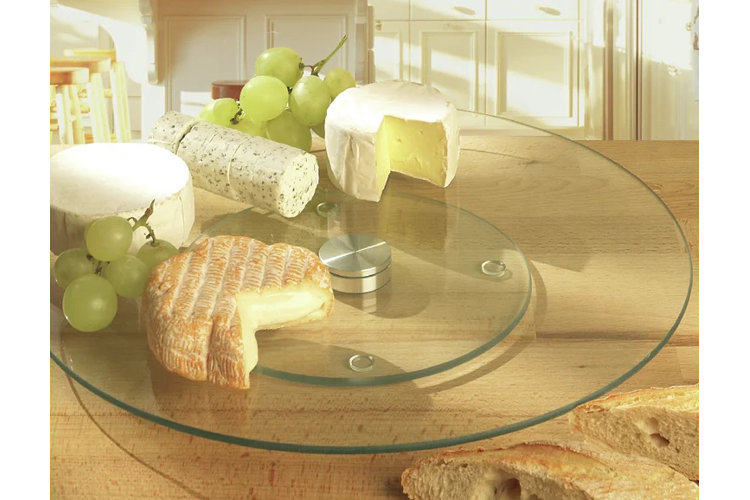
Glass: If you're looking for an elegant, upscale serving tray, a glass lazy Susan delivers. Plus, many of these turntables are made of durable tempered glass that's resistant to scratching and shattering.
Marble:Marble is a durable and aesthetically pleasing material for lazy Susans. Though heavier than their wood or plastic counterparts, marble lazy Susans bring a modern look to your kitchen.
Modern lazy Susans are practical and convenient, with plenty of features to keep your dinner parties running smoothly.
Outdoor: Outdoor lazy Susans are a great addition to your backyard table, making it easy to share a meal with family and friends. These turntables are typically weather-resistant, serving your culinary needs in all conditions.
Includes Handle: Some lazy Susans include handles for convenient carrying, allowing you to easily pick up the turntable and move it around the room when needed.
Customizable: With a personalized lazy Susan, you can engrave your family's last name and year established for a one-of-a-kind keepsake. These customized turntables make great gifts for weddings, anniversaries, housewarmings, or any other special family occasion.
Frequently Asked Questions
What is the primary use of a lazy Susan?
A lazy Susan is primarily used to serve food and condiments by rotating on a table.
How did the lazy Susan get its name?
The name likely derives from the 18th-century use of 'Susan' for female servants and complaints about their laziness.
What materials are commonly used to make lazy Susans?
Lazy Susans are commonly made from wood, plastic, glass, marble, stainless steel, and aluminum.
Written by Robyn Tellefsen
