What Is a Ladle? Soup, Stew & Serving Guide
The perfect scoop every time.
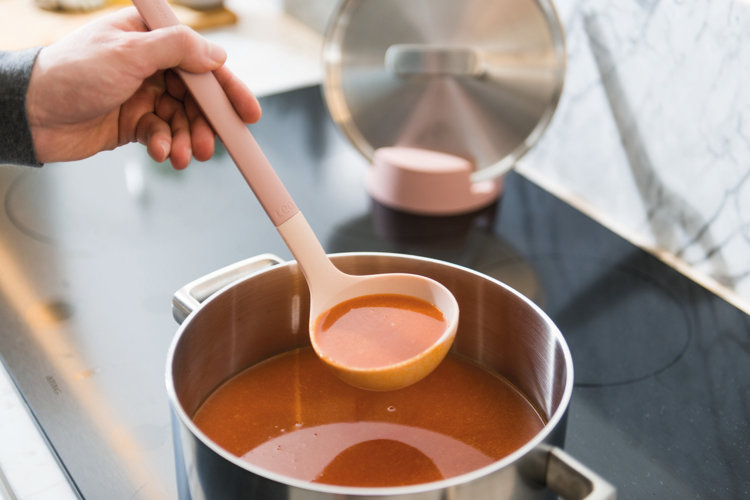
A ladle is a deep-bowled serving spoon featuring a long, angled handle designed to transfer soups, stews, bisques, and gravies safely without messy spills. If you love soup, bisque, chili, or chowder, you’ll want to have one handy. Not sure what a ladle is used for or why you might need one? Keep reading to find one that'll complete your kitchen repertoire.
Key Takeaways
- Ladles Come in Specific Varieties for Different Tasks: Standard soup ladles (4–6 oz) handle heavy liquids like stews and chili, smaller sauce ladles (1–2 oz) offer precise control for gravies and dressings, wide punch ladles serve party beverages, and slotted or skimming ladles strain solids or skim fat.
- Size & Capacity Dictate Functionality: Ladle capacities range from mini 1–2 oz models for drizzling to extra-large 8+ oz models for batch cooking and punch bowls, with standard 4–6 oz ladles being the most popular choice for everyday cooking.
- Material Selection Impacts Cookware Safety & Care: Stainless steel is the most durable and heat-resistant option for daily use, while silicone or nylon is essential for protecting nonstick cookware, and wood offers a gentle, stylish alternative that requires hand washing.
What Is a Ladle? (Definition & Uses)
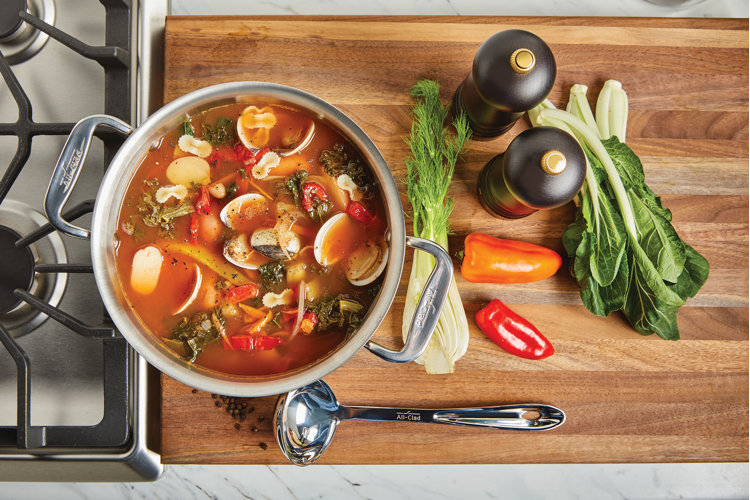
Ladle Definition
A ladle is a kitchen utensil with a deep, rounded bowl and a long handle, designed for scooping and serving liquids like soup, stew, chili, gravy, and punch. Most soup ladles hold about 4–6 ounces per scoop, with handles roughly 13–14 inches long so you can reach into deep pots without burning your hands. In everyday cooking, “ladle” means the go-to tool for transferring broth-based dishes from pot to bowl.
What Is a Ladle Used for?
A ladle is an essential kitchen tool for effortlessly portioning liquids into serving bowls without spills. Smaller ladles can be used to drizzle gravy and sauces, while wide-bowled punch ladles serve crowd-pleasing beverages. Standard ladles also simplify batch cooking and portioning directly from slow cookers, while specialized slotted or skimming ladles let you strain solids and skim fat off simmering broths.
Types of Ladles at a Glance
| Type | Bowl shape | Best for |
|---|---|---|
| Soup ladle | Deep, round, 4–6 oz | Soup, stew, chili |
| Sauce / gravy ladle | Smaller, pour lip | Gravy, sauces |
| Skimming ladle | Slotted or perforated | Skimming fat / foam |
| Punch ladle | Wide; often ornate | Punch bowls, parties |
Soup Ladles
Soup ladles feature a wide, deep bowl and a long handle, and are designed to hold large volumes of liquid (typically 4–6 ounces) in a single scoop. Their rounded rims prevent drips, while the long handle keeps your hands safe when reaching deep into a hot stockpot. Use it for serving soups, stews, broths, and chili directly from cookware into bowls.
Sauce/Gravy Ladles
Considerably smaller than a soup ladle, a sauce or gravy ladle holds roughly 1–2 ounces and frequently features an oval bowl with a pour spout. The smaller size allows for precise control over portioning, while the pour spouts help prevent messy spills. Use it for pouring gravy, hot fudge, fruit coulis, and delicate sauces over food.
Skimming Ladles
Skimming ladles are designed with small holes, slots, or a fine mesh bowl to allow liquid to pass through while retaining solid ingredients. Use it to lift boiled foods like dumplings, pasta, or poached eggs from hot water, or to strain fried items from oil without transferring excess liquid to the serving plate.
Punch/Serving Ladles
Serving ladles are characterized by a mid-sized bowl and a curved, decorative handle – engineered specifically for serving from wide, shallow party bowls. The bowl shape easily scoops punch without scraping the bottom, while the handle's curve allows it to rest safely on the edge of the bowl. Use it at gatherings for punch, mulled wine, or fruit-infused beverages.
Ladle Materials Compared
| Material | Best for | Heat / care | Watch-outs |
|---|---|---|---|
| Stainless steel | Daily soup & stew | High heat; dishwasher | Can scratch nonstick |
| Silicone / nylon | Nonstick cookware | Medium heat; easy clean | Less rigid for thick stew |
| Wood / bamboo | Gentle pots; style | Hand wash preferred | Can absorb odors |
| Mixed (steel + silicone) | Versatile serving | Check brand care guide | Joints may wear |
Ladle Sizes & Capacities
| Capacity | Typical size | Best for |
|---|---|---|
| 1–2 oz | Mini / sauce ladle | Gravy, dressings, tasting |
| 2–4 oz | Small ladle | Sauces, broths, single servings |
| 4–6 oz | Standard soup ladle | Soup, stew, chili |
| 6–8 oz | Large ladle | Hearty soups, big pots, batch serving |
| 8+ oz | Extra-large / punch ladle | Punch bowls, parties, deep pots |
Frequently Asked Questions
What is the typical capacity of a ladle bowl?
A typical soup ladle holds about 4–6 ounces per scoop. Sauce ladles are smaller; punch ladles may be larger.
Why is the handle of a ladle long?
A long handle (often 13–14 inches) keeps your hands away from hot liquid and reaches the bottom of deep stockpots.
What material is most durable for ladles?
Stainless steel is generally the most durable and dishwasher-safe option. Choose silicone or nylon for nonstick cookware.
Is it ladle or ladel?
The correct spelling is ladle (L-A-D-L-E). "Ladel" and "laddle" are common misspellings of the same kitchen utensil.
Is a metal or silicone ladle better?
Metal (stainless) excels for durability and hot soups. Silicone is better for nonstick pans and quieter stirring. Many cooks keep one of each.
What is the difference between a ladle and a serving spoon?
A ladle has a deep, cup-shaped bowl for liquids. A serving spoon is shallower and better for solids like vegetables, pasta, or rice.
