How to Transition From a Crib to a Toddler Bed
An exciting next step!

You blinked and your baby grew from a newborn to a toddler right before your eyes! As your toddler starts to stand and walk on their own, you’ve probably started thinking about upgrading their crib to a toddler bed. There’s a lot to consider, and you may be wondering where to start, but we’ve got you covered. Keep reading to learn all you need to know about making the transition from a crib to toddler bed as easy as possible for both you and your toddler.
In this guide:
1. Choose the Right Toddler Bed
2. Keep Your Routine the Same
3. Consider a Convertible Crib
4. Upgrade to Toddler Bedding
5. Have the Conversation Early
6. Reinforce Healthy Nighttime Etiquette
Frequently Asked Questions
1. Choose the Right Toddler Bed
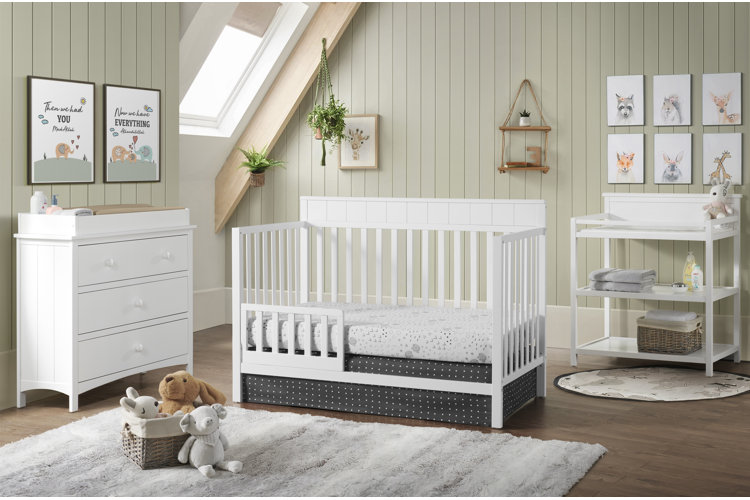
Toddler beds are specifically designed to help your child transition from sleeping in a crib to sleeping in a bed, typically around age 1 to age 3 (though everyone is different!). As a parent, you may have some concerns or be anxious about switching your child to a toddler bed – make sure to consider the following features when choosing a bed to ensure you’re choosing the safest and most comfortable option.
- Prioritize Guardrails: Installing guardrails or choosing a toddler bed with guardrails built-in is very important for toddlers who aren’t yet used to sleeping in a bed. The rails are much shorter than the ones on a full crib, but they still do the job of preventing your little one from falling out of the bed. Toddler beds are also super low to the ground, so if they do roll out, it’s not a big fall. You can also place another toddler mattress on the ground next to the bed for extra protection, just in case.
Choose Furniture With Rounded Corners: While guardrails keep your child from tumbling out while asleep, they do not prevent your child from climbing out of bed. Since little ones can climb out, be sure to choose a bed frame and other bedroom furniture without sharp corners or protruding hardware to prevent injuries. Choosing a toddler bed with rounded corners or one that is upholstered will keep your child safe if they accidentally bump into their bed.
- Make Sure It’s GREENGUARD Gold–Certified: No one likes furniture with a strong chemical smell, and the last thing you want to do is expose your child to toxins while they sleep. A GREENGUARD certification means that the toddler bed meets strict chemical emission limits and has been tested for more than 10,000 chemicals. In order to meet these standards, each toddler bed is tested to ensure it is free from harmful emissions, and all certifications are based on scientific data.
Tip!
To learn more about the GREENGUARD Gold Certification, check out our guide on GREENGUARD Gold-Certified nursery furniture.
2. Keep Your Routine the Same
To help your toddler cope with this change, keep the rest of their routine and surroundings as familiar as you can. A new bed may spark new decorating ideas or a new furniture layout in your mind, but try not to go overboard during this transitional period. It’s wise (and comforting!) to keep your child’s toddler bed in the spot where their crib previously lived. If they have a favorite stuffed animal or a security blanket, let your toddler know they’ll be able to bring it with them when they sleep in their new bed.
Tip!
Give your child a few months to adjust before making any other big changes to their routine and life – like toilet training, moving homes, or giving up their pacifier.
3. Consider a Convertible Crib
A great way to save money and make the transition smoother for your child is to invest in a convertible crib from the beginning. Convertible cribs are also convenient for parents – simply remove one side of your toddler’s crib and replace it with the guardrail. That’s it! Your child will be able to sleep snugly in their familiar bed.
4. Upgrade to Toddler Bedding
While it’s recommended to keep your baby’s crib minimal when it comes to bedding, for their safety, your toddler will have more freedom with bedding choices. Use this as a fun experience to allow your toddler to choose a sheet and comforter set in their favorite color or with their favorite characters on it. This will help get them excited about sleeping in their own bed.
5. Have the Conversation Early
Try to start the transition conversation a few days before your child moves from their crib to a toddler bed. There’s no reason to spend weeks hyping up the move, but it’s smart to give them a heads-up that change is coming. They’ll know what to expect if you have the conversation in advance. Springing a new bed on a little one and removing the crib from their room without warning can cause anxiety and a harder transition. Sweeten the deal by giving them a new stuffed animal or blanket to snuggle with while they adjust to the change.
6. Reinforce Healthy Nighttime Etiquette
In preparation for making the big move, keep in mind the new sense of freedom your toddler will have. Being upgraded to “big kid bed” status is exciting, and they will now be able to roam around (and perhaps outside of) their room. To keep your child in bed, practice enforcing a “last call” where they know to make that last bathroom trip and round up their preferred stuffed animal, water, or anything else they’ll need during the night. Since toddlers don’t always like to listen, use baby gates as needed to prevent them from falling down stairs or getting into hazardous areas when they’re supposed to be asleep.
Tip!
Looking for more bedroom ideas for toddlers? We’ve got you covered! Check out our 10 Kids Bedroom Ideas.
Frequently Asked Questions
What age should my child transition to a toddler bed?
Toddlers typically transition from a crib to a bed around ages 1 to 3, but it varies.
Why is GREENGUARD Gold Certification important for toddler beds?
It ensures the bed meets strict chemical emission limits, keeping your child safe from toxins.
How can I make the bed transition easier for my toddler?
Keep routines consistent and place the new bed where the crib was to provide familiarity.
