Percale vs. Sateen: How to Choose the Best Sheets
Discover which bed linens are best for your home.
If you are shopping for sheets, you may wonder: “What's the difference between percale vs. sateen?"
First, you'll want to know that percale and sateen are not two different kinds of materials. They actually describe different ways to weave fabric on a loom. Before we explore the difference between sateen vs. percale, let's talk about what percale and sateen are and how the terms are important when selecting high-quality bed sheets.
What Is Percale?
In short, percale is a tight-knit weave that uses an under-over, criss-cross pattern. This results in a smooth, crisp feel. To be considered percale, the sheets must have a thread count of at least 180. Percale linens typically have a thread count of 200 to 400. To learn more, read our guide What Is Percale?.
What Is Sateen?
Satin is also a woven fabric, but it incorporates three yarns under and then one yarn over. This exposes more of the thread's surface, resulting in a silkier texture. Sateen sheets are slightly heavier than percale. Sateen can mimic the look and feel of much more expensive silk and satin linens. Check out our guide What Is Cotton Sateen? to learn more about this type of weave.
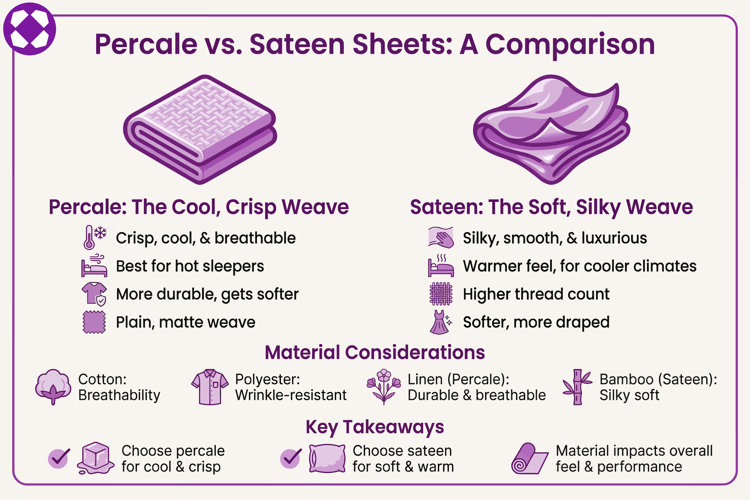
Although they are both tightly woven fabrics popular for bed sheets, pillowcases, and other linens, there are several differences when it comes to percale vs. sateen.
Weight & Feel
Because sateen uses more threads to make up its weave, it is a denser and heavier fabric. This lends to its silky sheen, but also makes it heavier.
Percale, on the other hand, is lightweight and airy, perfect for people who may get warm at night or simply perfect a crisp feel to their sheets.
Durability & Maintenance
Both percale and sateen sheets hold up well to washing in cold water, gentle cycle. Percale's tight weave means it is resistant to pilling or breaking and your sheets will stand the test of time. Percale also tends to become softer with each wash.
Sateen is also a durable fabric and it is also wrinkle resistant, which means your sheets will look great as soon as you take them out of the dryer and put them on the bed.
Looks
Both percale and sateen come in colors and patterns to match virtually any home décor.
Sateen's extra fibers give it a shiny look that mimics silk or satin. Some people prefer this look, especially in a primary bedroom or a guest room. But percale also offers a clean design that can make any room feel like a luxury hotel.
Many people prefer percale for bed linens because percale is durable, low maintenance, and smooth to the touch. Many hotels use percale sheets, so if you are looking for a luxury hotel experience at home, you may choose percale sheets with a high thread count for your bedroom.
Percale tends to last a long time without pilling, making it a practical material if you hope to get years of use out of your linens. And if you're looking for a fabric that will keep you cool, especially in a warmer climate or a home without air conditioning, percale linens may be the best choice.
People like sateen bed linens because they are comfortable, shiny, wrinkle-resistant and luxurious. If you have allergies or sensitive skin, sateen's smooth texture, which is also designed to resist mildew due to a specialized finishing process, may be better.
Likewise, if you don't like the “swishing" sounds of bed linens or are a light sleeper, sateen tends to be a quieter material.
What Else Is Important When You Choose Bed Linens?
When you're shopping for bed sheets and pillowcases, there's a lot more to consider than just percale vs. sateen. You'll want to consider the thread count, as the higher the thread count, the softer the sheets will feel.
When you're choosing between percale vs. sateen, a number of factors will lead you to the best decision. You may want to build your collection of bed linens with both options in your home. Because you can never have enough bed sheets to suit every mood, decor, and time of year, right?
Written by Dawn Allcot
