Your Guide to Baking Bread in a Dutch Oven
Love your Dutch oven.
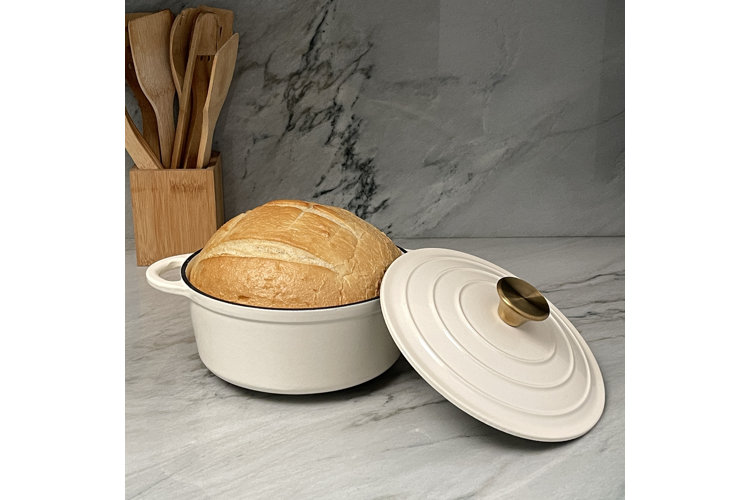
If you’ve never had crusty Dutch oven bread, you’re missing out. A Dutch oven is a useful and versatile piece of kitchen cookware extolled by chefs and at-home cooks alike that are great bakeware for bread baking. A Dutch oven creates the perfect environment for baking bread – you’ll find yourself with a soft, crispy, mouthwatering loaf that looks like it was bought from a local bakery. Here is your guide to baking bread in a Dutch oven so you can enjoy this tasty treat.
Tip!
Need more kitchen essentials? Check out our guide: The Best Pots & Pans Sets to Make Cooking Fun
What Is a Dutch Oven?
Why Are Dutch Ovens Good for Baking Bread?
Features of the Best Dutch Ovens for Bread
Dutch Oven Bread Baking: Tips & Tricks
What Is a Dutch Oven?
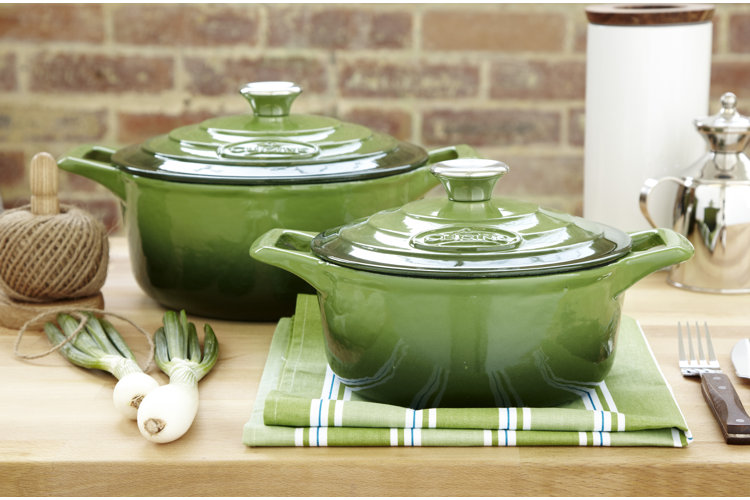
A Dutch oven, also known as a casserole dish, is a heavy cooking pot with handles that is fitted with a tight lid. Dutch ovens are typically used for braising and making stews and soups, but they are also excellent for baking bread since they’re able to withstand high heat from ovens. For more information on Dutch ovens, check out our guide What Is a Dutch Oven?
Tip!
Find the perfect dutch oven for baking bread and other dishes in our guide: 10 Best Dutch Ovens to Complete Your Kitchen
Why Are Dutch Ovens Good for Baking Bread?
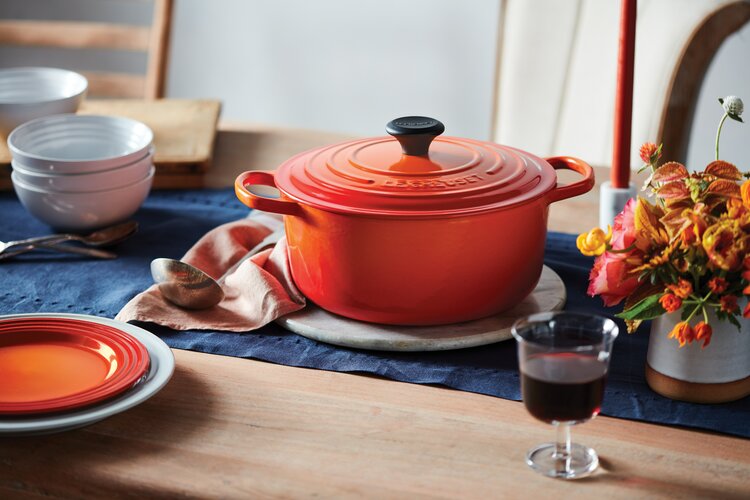
A Dutch oven creates an environment that allows bread to rise tall – this makes the inside of the bread light and airy while the crust is crisp and glossy. A Dutch oven distributes heat more evenly through the flour than a conventional oven, and it heats every part of the bread, even the deep center to make the softest, pillowy, crusty Dutch oven bread. The moisture inside the bread is trapped in the form of steam, keeping the crust soft longer. When the crust stays soft, the dough has more time to rise. As a result of these conditions, the bread gains a glossy, thin surface, a lofty height, and an airy interior.
Features of the Best Dutch Ovens for Bread
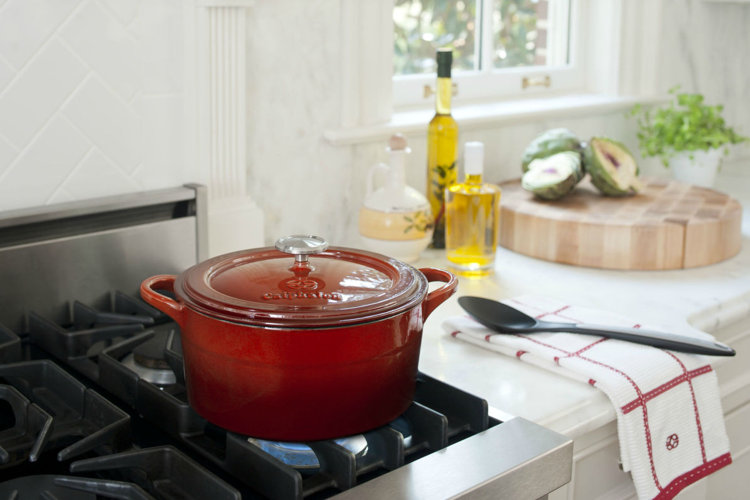
Read on to hear about the best Dutch oven materials, size, and shapes if you’re going to be using it for Dutch oven bread baking.
Material
Cast Iron: If you will be using your Dutch oven to bake bread, keep an eye out for cast-iron Dutch ovens. Cast iron can withstand the high heat used to preheat the Dutch oven, which can sometimes reach 500° F depending on the recipe. Heavy cast-iron Dutch ovens also provide great heat retention and distribution, making them the best Dutch ovens for bread.
Enameled Cast Iron: Choosing an enameled cast-iron Dutch oven for baking bread is a matter of personal preference. Some bakers prefer an enameled interior because bread is less likely to blacken and stick to the inside of the Dutch oven. However, most enamel cannot withstand the highest temperatures used to bake bread, so make sure to check your Dutch oven’s temperature range and to adjust recipe temperatures to protect the enamel from cracking.
Size & Shape
5–7 Quart Capacity: It’s important to consider the size of your Dutch oven before using it to bake bread. A Dutch oven that’s too small for the amount of dough used will constrain the bread as it tries to rise, making the interior dense and possibly burning the exterior. One that’s too large will lead to flat and wide bread that fails to achieve a proper height.
Size is determined based on capacity or serving size – consider how large you would like each loaf of bread to be and how many people you will be serving before purchasing your Dutch oven. If you’re planning on using a specific recipe, check to see if it recommends a particular size for your Dutch oven. Most recipes are written for use with a Dutch oven with a 5–7 qt. capacity – using a Dutch oven of this size with most recipes will give your bread space to rise without flattening out.
Oval Shape: While you can bake bread in a round Dutch oven, an oval Dutch oven produces the classic bakery bread shape. This is the best Dutch oven for bread if you want bakery-level results.
Dutch Oven Bread Baking: Tips & Tricks
For a fool-proof method to making crusty Dutch oven bread, follow these tips and tricks.
Step 1: Make Your Dough
Follow your favorite bread recipe to craft your bread dough. It typically takes 8 to 24 hours for dough to rise unless you’re following a fast-rise recipe. You’ll need a mixing bowl to let the dough rise and a dish towel to cover it, so make sure you stock your kitchen with these bread-making essentials as well!
Step 2: Fix Blackening
If you notice your bread is burning or blackening at the bottom, place high-quality parchment paper in the bottom of the Dutch oven to prevent sticking. Most Dutch oven bread recipes require oven tempts to be around 500°F, so it’s important to use parchment paper that can withstand this temperature so it doesn’t catch fire. Place the Dutch oven on the upper rack and a baking stone or sheet on the lower rack to shield the bottom of the Dutch oven from direct heat.
Step 3: Increase Steam
Try spritzing your dough with a little bit of water right before you put it in the Dutch oven. Using a handheld spray bottle can help you evenly disperse water over your dough to add extra steam to the Dutch oven.
Step 4: Get Creative
Don’t be afraid to get creative with your Dutch-oven bread! Try mixing in cheese, garlic, herbs, or anything else you’d like to try. Add extra ingredients while you are first mixing together the dough to ensure that they are evenly distributed.
Now that you know how to make Dutch oven bread, it’s time to find the right sous chef!
