How to Store Fruit for Optimal Freshness
Learn how to store fruit.
Buying fresh produce can be expensive, so it's important to keep it from spoiling, especially if you don't plan on eating it all in one sitting. If you're wondering how to store fruit so that you don't have to race the clock to get through it in time, this guide will give you multiple fruit storage ideas.
The Importance of Proper Fruit Storage
Proper fruit storage will keep your fruit fresh for longer and ensure food safety and cleanliness in your kitchen. Without proper storage or ventilation, fruit can spoil quickly and be susceptible to mold and pests. It's also a good idea to store fruit and vegetables separately because fruits give off high levels of ethylene gas which makes the surrounding produce ripen and spoil prematurely.
Where to Store Fruit by Type
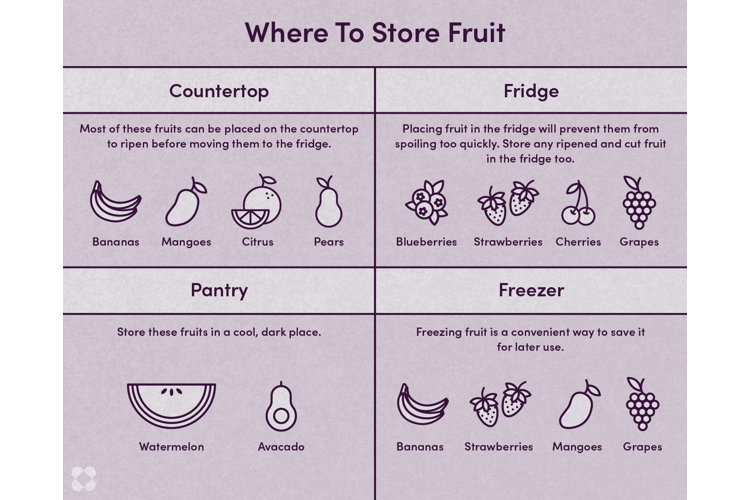
The proper fruit storage will depend on the type of fruit you have on hand. Review the chart above for recommendations on where to store each type of fruit, and explore the storage solutions outlined below.
Countertop Storage
Some fruit, including apples, pears, bananas, peaches, nectarines, and citrus, can simply be placed on a countertop until they ripen. Use a fruit bowl or basket for convenient countertop fruit storage that looks fresh and organized. Some fruits ripen faster in a dark environment, so opt for a breadbox if you’re looking to speed up the process. If you’re short on counter space, hanging fruit baskets or multi-tiered fruit bowls can add more storage without cluttering your kitchen.
Refrigerator Storage
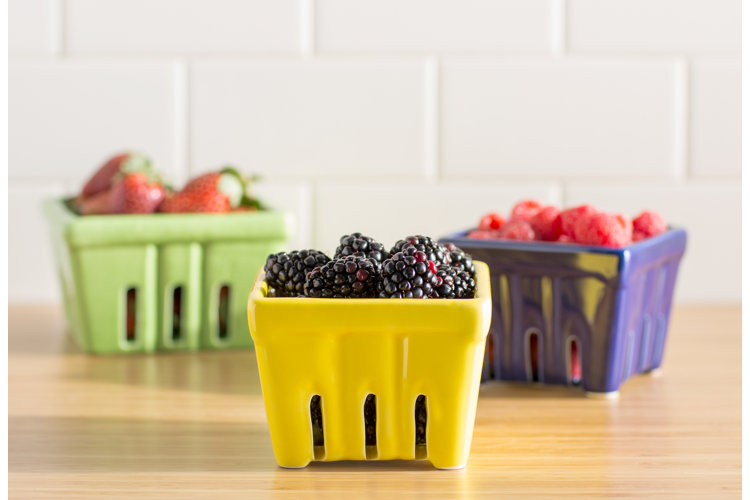
Many fruits should be stored in the refrigerator to prevent them from ripening too quickly and keep them fresh longer, including cherries, grapes, and any kind of berry. Some fruits, such as cherries and avocados (once ripened) can be placed in airtight containers for extended storage. Other fruits, such as berries, need to be stored in well-ventilated containers to prevent mold growth from excess moisture. Any fruit that has been cut or sliced should be kept in the fridge to prevent spoilage.
Freezer Storage
One of the easiest ways to store fruit and keep it from going bad is by using a freezer. Fruits such as berries, bananas, and mangoes can be frozen and used in smoothies, added to hot cereal, or for baking. An airtight, freezer-safe storage container or plastic bag lets you preserve any leftover fruit that you’re not able to get to in time. If you’re afraid of freezer burn, use a vacuum sealer to remove excess air from storage bags. Keep in mind that fruit will stop ripening once it’s placed in the freezer.
Canning Jars & Canisters
If you have excess fruit, it might be time to try your hand at canning and making preserves. Large, firm fruits like pears, plums, and apples work well for canning. Blueberries, strawberries, and apricots work well in preserves, such as jams or jellies. Preserved fruits can last 2–3 years in unopened cans when stored properly in a cool, dry place. Once you break the air-tight seal, store canned fruits and preserves in the fridge for 1–3 months.
Storage Jars
If you’re feeling creative, you can also dehydrate fruit and store it in jars to keep it for longer. Banana chips, apple crisps, dried mango slices, raisins, and dried cranberries are just a few delicious snacks you can make by drying fruit. A dehydrator doesn't only work on fruits; it's also possible to make your own dried herbs or jerky. If you don't have space for a single-use appliance such as a dehydrator, an air fryer will do just the trick. Once dehydrated, dried fruits can be stored in airtight containers or storage jars at room temperature.
