How to Install Cabinet Handles: Placement & Steps
An easy home upgrade.
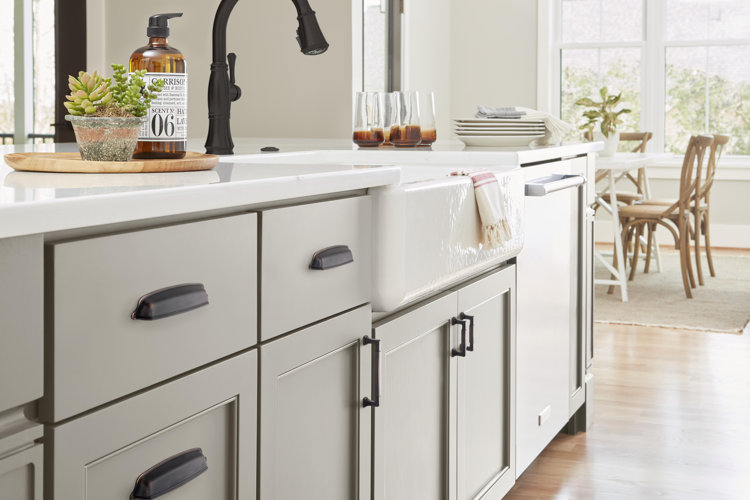
Installing or replacing cabinet handles is one of the easiest, most affordable ways to instantly upgrade your kitchen or bathroom. Whether you are refreshing existing cabinetry or finishing a new installation, following consistent measurements ensures a clean, professional finish.
Key Takeaways
- On upper cabinet doors, mount pulls 2 to 3 inches up from the bottom corner on the side opposite the hinge.
- On base cabinet doors, mount them 2 to 3 inches down from the top corner.
- For drawers, center the pull horizontally and place it slightly above the vertical midpoint on taller drawer fronts.
- Use knobs on smaller doors and pulls on wider doors and drawers for a comfortable grip.
Tools & Materials You'll Need
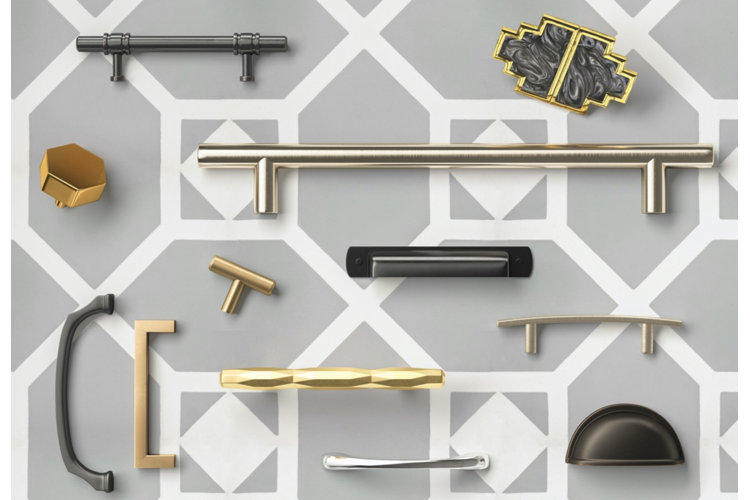
Having the right tools on hand before you begin ensures a smooth installation process:
- Replacement Cabinet Handles & Screws: Standard hardware includes mounting screws.
- Power Drill & Drill Bits: A 3/16-inch drill bit works for most cabinet hardware screws (always check your manufacturer’s specs).
- Screwdriver: A Phillips or flat-head screwdriver (depending on screw head type) to tighten hardware without stripping.
- Tape Measure or Combination Square: For precise spacing and height measurement.
- Pencil: To mark hole locations on doors and drawer fronts.
- Painter's Tape (Optional): Prevents wood splinters or paint chipping when drilling into finished surfaces.
Cabinet Knobs vs. Pulls: Which to Use
- Knobs (Upper Doors & Small Drawers): Best for light-duty doors and traditional, classic, or cottage styles where subtle hardware works best.
- Pulls (Base Doors & Large Drawers): Offer a stronger, ergonomic grip ideal for heavy drawers and clean-lined modern or contemporary spaces.
- Mix & Match (Knobs on Doors, Pulls on Drawers): Pairs easy-access knobs up top with sturdy pulls down below for a balanced, practical design.
Proper placement keeps your kitchen functional and visually balanced. As a general rule, place handles where they are most ergonomic and comfortable to reach.
Upper Cabinet Door Placement
For wall or upper cabinets, handles are positioned near the bottom corner opposite the hinge:
- Vertical Alignment: Place the bottom hole of the handle 2 to 3 inches up from the bottom edge of the cabinet door.
- Horizontal Alignment: Center the handle horizontally on the door frame stile (typically 1 to 1.5 inches from the outer edge).
Base Cabinet Door Placement
For lower or base cabinets, handles are positioned near the top corner opposite the hinge so you don't have to bend down as far:
- Vertical Alignment: Place the top hole of the handle 2 to 3 inches down from the top edge of the door.
- Horizontal Alignment: Center the handle on the door stile, aligning it with the outer edge.
Drawer Pull Placement
For drawers, placement depends on the width of the drawer front:
- Standard Drawers (under 24 inches wide): Center the pull horizontally and vertically in the middle of the drawer panel.
- Wide Drawers (24 inches wide or larger): Install two pulls per drawer. Divide the drawer width into thirds and place a pull at the 1/3 and 2/3 marks, centered vertically.
How to Install Cabinet Handles Without a Template
Step 1: Measure the Distance Between Screw Holes
Measure the center-to-center distance (from the exact center of one screw hole to the center of the second hole) on your handle hardware. Common center-to-center sizes include 3 inches, 3.75 inches (96 mm), and 5 inches (128 mm).
Step 2: Mark the Location for Your Handles
- Apply a piece of painter's tape over the target area on your cabinet to make marks easy to see and to protect the finish.
- Using your ruler or combination square, measure and mark the height location for the first hole with a pencil.
- Using your center-to-center measurement from Step 1, measure directly up (for vertical door handles) or across (for horizontal drawer pulls) to mark the second hole location.
- Double-check all measurements across multiple doors before drilling to verify uniform spacing.
Step 3: Drill Pilot Holes
- Attach a 3/16-inch bit (or recommended size) to your power drill.
- Hold the drill completely straight (90-degree angle to the door surface) to prevent crooked screws.
- Drill through the front face of the cabinet door or drawer through your pencil marks on the tape.
Step 4: Screw in the Handles
- Peel off the painter's tape.
- Insert the screws from the back side of the cabinet door through the drilled holes.
- Align the handle with the protruding screw threads on the front.
- Thread the screws by hand first, then use a handheld screwdriver to tighten until snug. (Avoid over-tightening with a power drill, which can strip the threads or crack the cabinet wood.)
Step 5: Repeat for All Doors and Drawers
Repeat steps two through four for each cabinet door and drawer. Re-measure each panel individually rather than relying on visual estimation to maintain visual symmetry across your space.
Step 6: Check Handle Tightness
Once all hardware is attached, check every handle by giving it a light wiggle. If any handle feels loose, use your screwdriver to give the back screws a quarter-turn until tight and secure.
Frequently Asked Questions
What size drill bit do I need for cabinet handles?
Most standard cabinet screws require a 3/16-inch drill bit. Always test your drill bit size on a scrap piece of wood or compare it directly against your screw before drilling into cabinet doors.
How high should handles be installed on upper cabinets?
The bottom of the handle should typically sit 2 to 3 inches above the bottom edge of the upper cabinet door, positioned on the opposite side of the hinges.
Can I replace cabinet handles using existing holes?
Yes! If your new handles have the same center-to-center screw hole spacing as your old ones, you can screw them directly into the original holes without re-drilling.
How do I prevent cabinet wood from splitting when drilling?
Placing painter's tape over the mark before drilling helps prevent surface chipping. Additionally, drill at a steady speed without applying excessive forward pressure, allowing the bit to cut smoothly through the material.
Do I need a template to install cabinet handles?
Not necessarily. A hardware jig or careful measuring with painter's tape works for most DIYers.
Should I use knobs or pulls for cabinets?
Knobs suit smaller doors and traditional kitchens. Pulls work better on wide drawers and modern slab doors where a full-hand grip is more comfortable.
