Armoire vs. Wardrobe: What Are the Differences?
Store more than clothes.
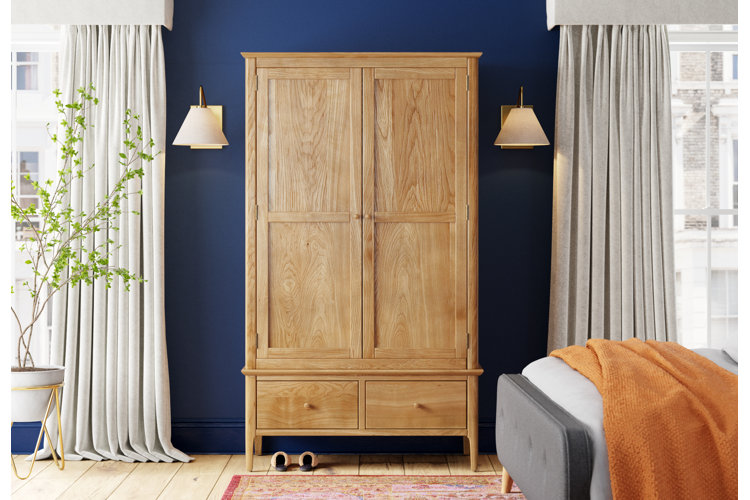
An armoire is a tall, freestanding cabinet traditionally used for storing clothes, linens, or media equipment. A wardrobe is a bedroom storage piece designed specifically for hanging and folding clothing. The main difference is that armoires are more versatile in placement and design, while wardrobes are optimized as dedicated clothing closets, especially in homes without built-in closets.
Armoire vs. Wardrobe at a Glance
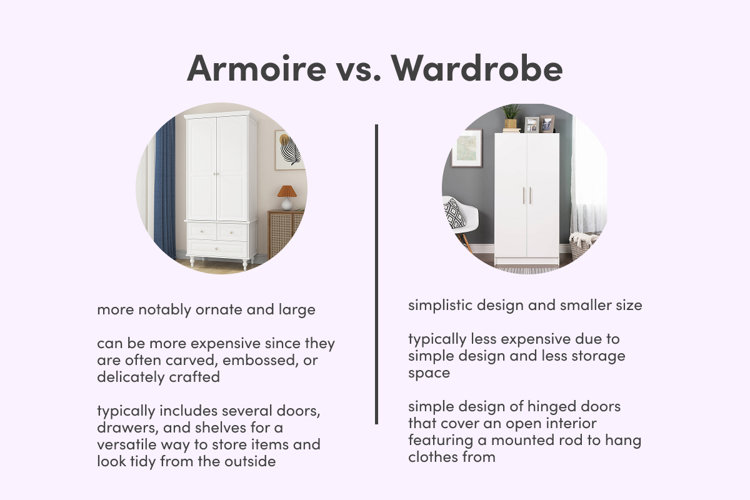
When you’re looking to add extra storage to a bedroom or living space, it’s easy to confuse an armoire with a wardrobe. Both are tall, freestanding furniture pieces that act as external closet spaces. However, choosing the right option for your home depends on what you plan to store inside it and how it fits into your overall design style. Here are some key differences between armoires and wardrobes at a glance:
Armoires
- Ornate and large
- More expensive due to ornate detailing
- Include a mix of doors, shelves, and drawers
- Can be used for multiple purposes around the home
Wardrobes
- Simple design and smaller footprint
- Typically more budget-friendly
- Simple interior design specifically for clothing
What is an Armoire?
An armoire is a tall, freestanding wooden cabinet with two doors that conceal a spacious interior of shelves, hanging rods, or drawers. Unlike basic bedroom storage, an armoire is often treated as a statement piece, showcasing elegant woodwork, intricate moldings, and decorative hardware that elevates your space.
Armoire History & Etymology
The name armoire carries a surprisingly rugged history. The term traces back to the Latin armorium – translating to a chest or closet used for storing tools, weapons, and armor. In the 16th and 17th centuries, before built-in closets became a staple of residential architecture, these heavy, oversized cabinets were essential additions to homes. As castles gave way to modern homes, armoires shifted from the battlefield and into elegant bedroom storage solutions for clothing, linens, and household treasures.
Types of Armoires
Today, armoires have evolved beyond traditional bedroom use to versatile storage solutions around the home.
- Clothing Armoires: Closest to the historic original, these pieces feature a layout optimized for clothing and accessories. They typically combine a spacious upper section with a clothing rod and adjustable shelves, and sit directly above lower drawers for folded clothes.
- TV & Media Armoires: Designed to keep electronic clutter out of sight, media armoires feature wire-management cutouts in the back, wide adjustable shelving for media consoles, and pocket doors that slide back cleanly to reveal a TV.
- Storage & Linen Armoires: Optimized entirely with shelving from top to bottom, these versatile cabinets act as external linen closets in bathrooms, hallways, or guest rooms.
Tip!
Learn more about armoires with our guide What Is an Armoire? Finding the Perfect Armoire Style for You.
What is a Wardrobe?
A wardrobe is a tall, freestanding storage unit designed specifically for clothing storage. Typically featuring clean lines and a straightforward, functional design, wardrobes are the ultimate solution for homes that lack built-in bedroom closets.
Wardrobe vs. Closet vs. Armoire
While these three terms frequently get tossed around together when sorting out bedroom clutter, they have very different designs, storage strengths, and stylistic impacts on your space. Here is how they break down:
- The Wardrobe: Wardrobes favor clean, simple lines over heavy ornamentation. Internally, wardrobes consist of a hanging rod to function as a substitute closet for hanging coats, dresses, and suits, usually offering only minimal shelf space or a single base drawer.
- The Closet: Unlike its freestanding counterparts, a closet is a permanent, built-in architectural feature of a home. It features a recessed storage cavity enclosed by standard bedroom walls, with sliding, bifold, or hinged doors that blend into the room. The interior layout can be completely customized with modular closet systems, top shelves, and multi-level hanging tracks.
- The Armoire: An armoire is characterized by its ornate, bulky structure and exquisite design details – think crowned moldings, carved wood, and statement hardware. While it holds clothes beautifully, its internal structure is much more varied than a wardrobe’s, offering a mix of deep adjustable shelves, pull-out drawers, and removable clothing rods that can also hold media gear, extra bedding, or home office supplies.
Armoire vs. Wardrobe: Side by Side Comparison
Armoire vs. Wardrobe Sizes
Armoires are typically bigger than dressers due to their ornate detailing. However, you can find compact armoires to fit smaller spaces or larger dressers to fit all of your hanging clothing.
Tip!
Looking for size guidance? Read our guide How to Measure an Armoire for a Fabulous Fit for measuring tips.
Armoire vs. Wardrobe Designs
Armoires and wardrobes come in an array of designs and styles. However, armoires are more ornate and are also often used as entryway pieces to store coats and shoes – or even displays in family rooms. The craftsmanship of the armoire usually includes several doors, drawers, and shelves for a versatile way to store items and provide a formal and tidy look from the outside.
Wardrobes use a simple design of hinged doors that cover an open interior featuring a mounted rod for you to hang your clothes from. Some newer wardrobes include a few drawers, though this is less common.
Armoire vs. Wardrobe Storage
While wardrobes and armoires are both excellent storage solutions, they have different capabilities. Armoires with shelves are typically better for storing larger items or for creating a decorative space, while drawers are more suitable for storing small items of various shapes and sizes. A mixed unit with shelves and drawers gives you the versatility to store everything from blankets to DVDs. Wardrobes are used solely for storing clothes via hangers – this typically includes dresses, shirts, and pants. Items like sweaters and undergarments that need to be folded would be better stored in a dresser or chest.
Armoire vs. Wardrobe Door Type
Depending on how often you're accessing your armoire, the doors can make a huge difference in how you use it. Units with hinged doors primarily function as storage to conceal away items, while doors that slide on a track offer easy access to both sides of the piece. Some units even feature an installed mirror to make your space appear larger – and save you the trouble of finding room for a floor or wall mirror. Similarly, the straightforward designs of wardrobes will typically feature a set of standard hinged doors.
Armoire vs. Wardrobe: Where Does Each Fit?
While both armoires and wardrobes add vertical storage to your home, they are designed to solve different spatial challenges. Wardrobes are designed with a focus on apparel and sit flush against your bedroom wall to maximize space. They are ideal for closet-free bedrooms, small guest rooms, or compact apartments. Armoires are characterized by ornate, bulky silhouettes, making them more suitable for large bedrooms, living rooms, and hallways. However, their flexible interior makes them a decorative multi-tasker that work seamlessly in multiple areas of the home – serving as a statement piece in bedrooms, as a central entertainment center in living rooms, or against a hallway wall for extra linen storage.
How to Choose Between an Armoire & Wardrobe
Consider these scenarios when deciding between an armoire or wardrobe for your home.
When to Choose a Wardrobe
If your main struggle is a lack of hanging space for apparel, a wardrobe is your best choice. The full-length hanging rod makes a wardrobe a great option for a freestanding closet extension.
- Small Bedrooms: Wardrobes maximize vertical square footage, giving you a dedicated spot to hang clothes without the bulky footprint of an armoire.
- Closet-Free Homes: If you live in an older home, a small apartment, or a loft space that completely lacks a built-in closet, a wardrobe is an essential addition to keep your dresses, suits, and coats organized and wrinkle-free.
When to Choose an Armoire
If you are looking for a versatile storage hub that can adapt to different rooms, choose an armoire.
- Multi-Use Bedrooms: An armoire is perfect for bedrooms where you need to store a mix of clothing items – like folded sweaters, shoes, and extra linens – rather than just hanging garments.
- Living Rooms & Dens: Armoires are a fantastic option for hidden electronic storage. A media armoire acts as an entertainment center, neatly tucking away your TV, consoles, and wires behind closed doors when they aren't in use.
- Dining Rooms & Home Offices: In a dining space, an armoire functions beautifully as a rustic hutch or linen cabinet for storing heirloom dinnerware and tablecloths. In a home office, it can easily house printers, paper, and baskets of office supplies to keep clutter out of sight.
Frequently Asked Questions
What is the main difference between an armoire and a wardrobe?
A wardrobe has a simple design primarily for storing clothes, while an armoire is a larger, more ornate piece that can serve multiple purposes beyond clothing storage.
Are armoires more expensive than wardrobes?
Yes, armoires are typically more expensive due to their larger size, ornate craftsmanship, and features like carvings or embossing, while wardrobes are usually more budget-friendly.
What storage features do armoires typically have?
Armoires usually include several doors, drawers, and shelves for versatile storage, while wardrobes feature a simple interior with a mounted rod for hanging clothes.
Can you use an armoire instead of a closet?
Yes. A clothing armoire can function as a freestanding closet by providing space to hang clothes, store folded garments, and organize accessories. It's an excellent solution for bedrooms without built-in closets or for adding extra storage in guest rooms.
Is a wardrobe or an armoire better for a small bedroom?
A wardrobe is usually the better choice for small bedrooms because it has a slimmer profile and is designed specifically for clothing storage. If you need more versatile storage for items like linens, shoes, or electronics, a compact armoire may still be a good fit if you have enough floor space.
Can an armoire be used outside the bedroom?
Absolutely. While armoires are often used for clothing storage, they also work well in living rooms, dining rooms, home offices, entryways, and hallways. Depending on the interior layout, they can store media equipment, office supplies, linens, dishes, or seasonal decor.
What should you store in a wardrobe?
Wardrobes are best for clothing that hangs on a rod, such as dresses, coats, suits, blouses, and shirts. If your wardrobe includes shelves or drawers, you can also store folded clothing, shoes, or accessories, but its primary purpose is hanging garment storage.
You Might Also Like
Ready to Shop? Check These Out!
Updated: July 2026
