Wood Colors, Types & Finishes Glossary
Wood finishes, made easy.
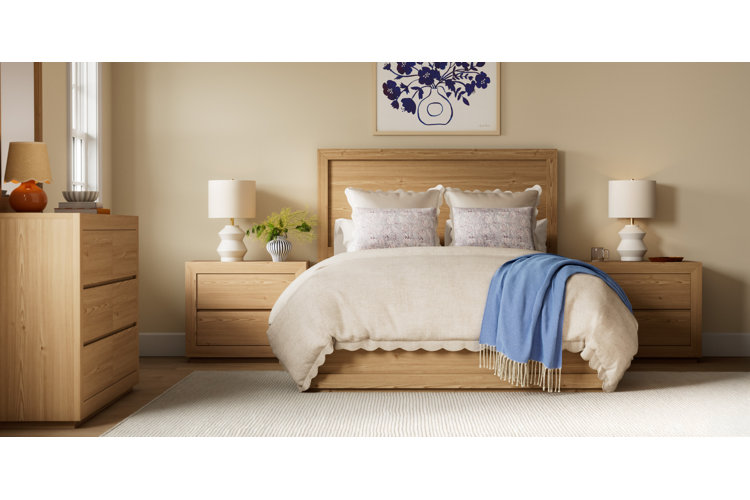
Wood furniture knows no style boundaries and is used in everything from ornate, traditional pieces to sleek, modern selections. Beyond construction, the look of wood furniture can vary even further depending on the type and finish. In this guide, we’ve covered the basics of the many colors and types of wood for furniture and finish options.
In this guide:
Hardwood vs. Softwood vs. Manufactured Wood
Types of Wood for Furniture (A–Z)
Types of Wood Finishes
Frequently Asked Questions
Hardwood vs. Softwood vs. Manufactured Wood
Choosing the right material begins with understanding the three primary categories used in home furnishings: hardwood, softwood, and engineered or manufactured options.
- Hardwood: Sourced from broad-leaved deciduous trees (such as oak, maple, and walnut) that shed leaves annually. Hardwoods are dense, dent-resistant, and sturdy, making them ideal for daily-use furniture like dining tables, bed frames, and dressers.
- Softwood: Sourced from evergreen conifer trees (such as pine, cedar, and fir). Softwoods grow quickly, making them lighter in weight and generally more budget-friendly. They are easy to carve, stain, and paint.
- Manufactured Wood: Human-made composites (such as plywood, MDF, and particleboard) engineered for stability. When topped with real wood veneers or durable laminates, manufactured options offer warp resistance and are budget friendly.
Types of Wood for Furniture (A–Z)
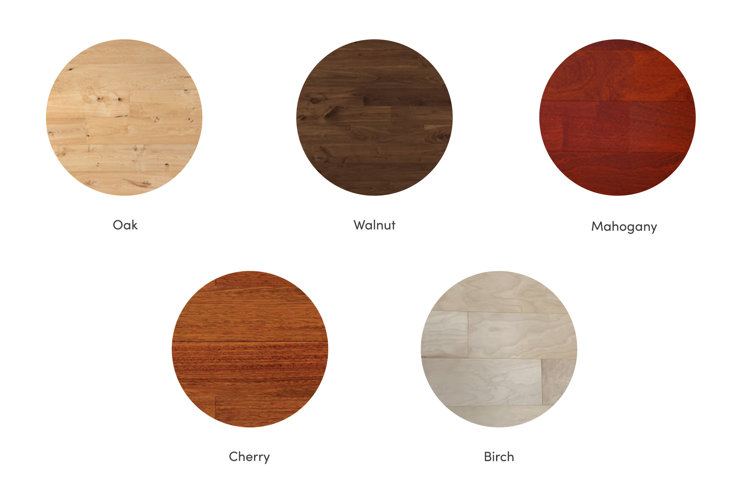
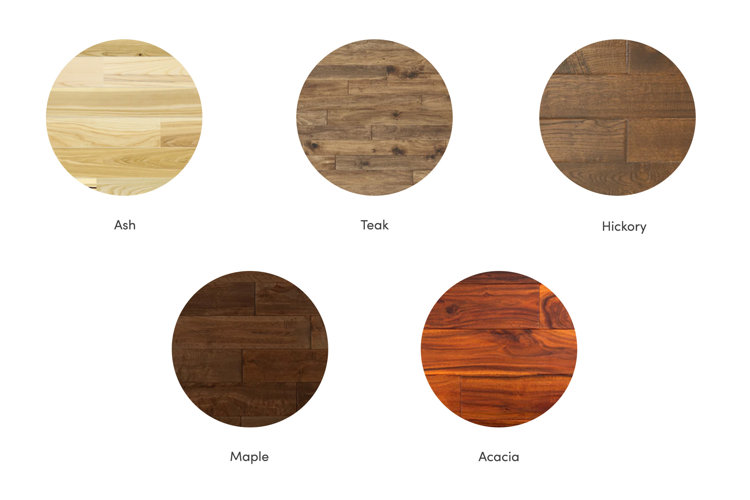
Acacia
Acacia is a dense hardwood featuring a rich reddish brown hue and a distinct, dynamic grain pattern. Because it is naturally resistant to moisture, rot, and insects, acacia excels in both indoor dining furniture and weather-ready patio pieces. Learn more with our article on what is acacia wood.
Ash
Ash is a light-colored, tough hardwood with excellent impact resistance. Famous for its flexibility without loss of structural integrity, white ash is frequently bent and shaped to form curved chairs, mid-century modern silhouettes, and steam-bent frame details.
Birch
Yellow birch is a popular, durable hardwood with a light yellow-brown tone and a subtle wavy grain pattern. It accepts stains easily, making it a versatile choice across contemporary and traditional case goods.
Cedar
Cedar is a lightweight softwood recognized for its light reddish tones, dark knots, and aromatic natural oil. Because cedar repels moths and resists moisture, it is commonly used for armoires, dressers, chests, and outdoor storage benches.
Cherry
Cherry is a prized hardwood known for its smooth texture and rich pinkish-brown hues that naturally darken to a deep reddish patina over time. It takes polish exceptionally well, making it a classic standard for formal dining sets and traditional bedroom suites.
Hickory
Featuring an exceptionally dense composition and straight-grain pattern, hickory is one of the hardest native North American woods. Its medium brown tone and subtle reddish undertones make it a durable choice for rustic dining chairs, heavy-duty cabinets, and high-use seating.
Mahogany
Mahogany is a classic hardwood valued for its deep reddish brown color, fine grain, and superior dimensional stability. Resistant to swelling and shrinking, mahogany is widely reserved for heirloom-quality case goods, desks, and decorative veneers.
Maple
Hard maple offers a pale cream to light amber color with a fine, uniform grain. Its dense structure makes it highly resistant to dents, scratches, and heavy daily wear, rendering maple ideal for kitchen islands, butcher blocks, and high-traffic family tables.
Oak
Oak is one of the most widely used solid wood materials for furniture, available in white oak (gray-brown tones) and red oak (warm reddish undertones). Its pronounced, open grain pattern disguises minor scuffs, making oak perfect for solid wood tables, bed frames, and architectural cabinetry.
Pine
Pine is a lightweight softwood characterized by a creamy yellow color, prominent growth rings, and characteristic dark knots. It absorbs stains, paints, and distressing techniques easily, making it a favorite for cottage, rustic, and casual farmhouse decor styles.
Rubberwood
Rubberwood is an eco-friendly hardwood harvested from plantation trees after latex production ends. It features a uniform blonde color and tight grain pattern that finishes smoothly, offering strong stability for budget-friendly dining sets and accent tables. Check out our guide to explore what is rubberwood?
Teak
Teak is a dense, oil-rich hardwood prized for its natural weather resistance and golden brown tone. Ideal for patio seating, outdoor dining, and high-moisture spaces, teak withstands rain, sun, and temperature swings without cracking. Learn more about oiling and preserving teak with our guide on how to clean and care for teak furniture
Walnut
Walnut is a rich, dark brown hardwood highlighted by chocolate tones, subtle purplish streaks, and intricate grain lines. Dense yet workable, walnut remains a favorite for mid-century modern credenzas, executive desks, and high-end accent furniture.
Manufactured Woods (Plywood, MDF & Particleboard)
- Plywood: Layers of thin wood veneers glued with alternating grain directions to provide exceptional strength and warp resistance.
- MDF (Medium-Density Fiberboard): Fine wood fibers bonded with resin under heat, delivering a smooth, seam-free surface for painted finishes and cabinet doors.
- Particleboard: Compressed wood chips and adhesive engineered as a cost-effective core material for light-duty furniture with laminate or veneer facades.
Types of Wood for Furniture Compared
| Wood | Typical color | Durability | Best for |
|---|---|---|---|
| Oak | Red or gray-brown | Very high | Tables, chairs, floors |
| Walnut | Rich chocolate brown | High | Desks, beds, case goods |
| Maple | Cream to light amber | Very high | Dining, kids’ furniture |
| Cherry | Pink-brown; darkens | High | Bedrooms, formal dining |
| Teak | Golden to medium brown | Excellent outdoors | Patio & outdoor seating |
| Acacia | Warm brown, varied grain | High | Tables, indoor-outdoor |
| Pine | Pale yellow to amber | Medium (softwood) | Casual, painted pieces |
| MDF / plywood | Depends on veneer/paint | Medium; value pick | Painted cabinets, flats |
Wood Furniture Colors: Light to Dark
| Color name | Look | Example woods | Style fit |
|---|---|---|---|
| Ash / whitewashed | Pale gray-beige | Ash, white oak stain | Scandi, airy rooms |
| Maple / birch | Cream, light gold | Hard maple, birch | Minimal, modern |
| Natural oak | Warm tan-brown | White/red oak | Transitional classic |
| Honey / caramel | Golden mid-tone | Pine, teak, acacia | Casual, coastal |
| Walnut | Deep chocolate | American walnut | Mid-century, luxe |
| Espresso | Near-black brown | Stained maple/oak | Contemporary contrast |
| Mahogany red | Red-brown rich | Mahogany, cherry | Traditional, formal |
Types of Wood Finishes
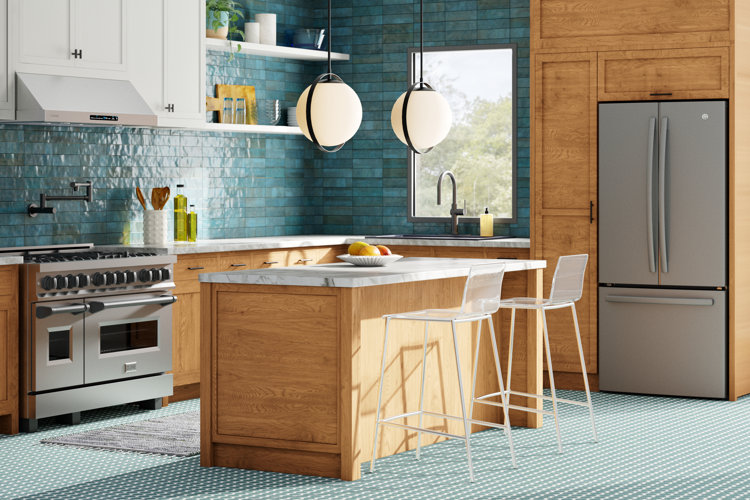
A finish coats or penetrates raw wood to protect against moisture, stains, and scuffs while highlighting the natural grain. Wood stains and finishes are not the same but are commonly confused. Below, we’ll explore the differences and other similar coatings used to protect wood furniture.
Wood Stain vs. Wood Finish
It's common to confuse wood stains and protective finishes:
- Wood Stain: Pigment that is applied to unfinished wood, which absorbs and alters the color without sealing against liquid or heat.
- Wood Finish: A top clear or translucent coat (like polyurethane, oil, or varnish) applied over stain to seal the grain from spills, dirt, and UV damage.
- Dye: Deeply penetrates wood flesh directly without a binder, enhancing grain contrast.
- Shellac: A natural, non-toxic clear glaze offering a warm, high-gloss shine.
- Liming & Whitewashing: Applied to create a chalky white effect in raw wood grain for a weathered, rustic aesthetic.
- Veneers: Fine, decorative real-wood sheets bonded over affordable manufactured cores for upscale style at a lower price point.
Frequently Asked Questions
What are the main variations of oak wood?
Oak wood has two main variations: red oak, which has a reddish cast, and white oak, which is gray-brown.
How does varnish affect wood furniture?
Varnish provides a clear, glossy finish that is resistant to impact, heat, abrasion, water, and alcohol.
Why is teak wood expensive?
Teak is expensive due to its weather resistance, quality, and long-lasting durability, making it ideal for outdoor furniture.
Neighborly Tip!
After familiarizing yourself with wood names and finish options, check out Your Guide to the Best Dining Table Wood Options to discover the best options for your home, budget, and lifestyle.
You Might Also Like
Start browsing now that you know all about different wood types.
