
Plants by Mail
Plants by Mail offers a wide range of products grown and shipped directly from our 300 acre nursery






Plants by Mail
22 Items

2.5 Qt. Blue Point Juniper - Small Tree for Full Sun with Blue-Green Foliage
By Plants by Mail
Rated 5 out of 5 stars.2 total votes
Blue Point Juniper (Juniperus chinensis 'Blue Point') is a versatile evergreen shrub or small tree that can bring a touch of elegance and structure to your landscape. This juniper variety is known for its dense, upright growth habit and striking blue-green foliage. It offers several compelling reasons to consider incorporating it into your landscape design. One of the main reasons to choose Blue Point Juniper for your landscape is its year-round visual appeal. The dense, columnar form of this juniper adds a strong vertical element, making it suitable for creating privacy screens, hedges, or focal points in the garden. The blue-green foliage retains its color throughout the year, providing a reliable backdrop for other plants and bringing a sense of stability and structure to the landscape, even during winter. Blue Point Juniper is highly adaptable and can thrive in various soil types and growing conditions. It is drought-tolerant once established, making it a great choice for water-wise landscapes. This juniper variety is also known for its resistance to deer and many common pests, making it a low-maintenance option for gardens where these issues are a concern. Caring for Blue Point Juniper is relatively simple. It thrives in full sun, requiring at least 6 hours of direct sunlight per day for optimal growth and color development. Ensure the soil is well-drained to prevent waterlogging, which can lead to root rot. Once established, Blue Point Juniper has good drought tolerance, but regular watering during dry spells will help maintain its vigor and overall health. Pruning requirements for Blue Point Juniper trees are minimal. You can lightly trim the shrub in early spring to shape and maintain its desired size. Avoid heavy pruning, as it may affect the natural form of the plant. The compact nature of this juniper tree variety also means it rarely requires shearing to maintain its shape. Fertilization is generally not necessary for Blue Point Juniper. However, if desired, you can apply a slow-release, balanced fertilizer in spring to provide additional nutrients. Follow the manufacturer's instructions for application rates and methods.
This is really cute! Its giving me variety, I want to say they get 10 ft tallish. Very healthy!. Victoria Lee. Tue Apr 11 2023
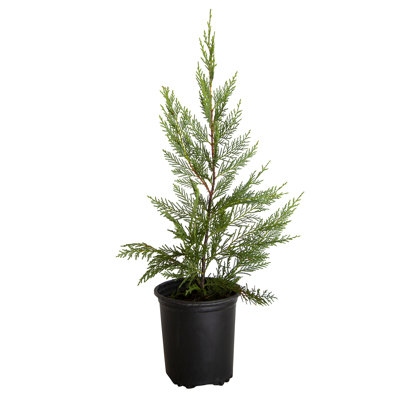
2.5 Qt. Leyland Cypress Tree - Fast Growing Evergreen Tree for Privacy Plantings
By Plants by Mail
Rated 5 out of 5 stars.2 total votes
Leyland Cypress trees are one the most popular evergreen tree varieties for planting in the landscape. If you are looking for a fast-growing coniferous tree for privacy? This is the quick-growing evergreen tree for you. These gorgeous evergreens grow up to 3-5 ft. per year. In addition to speedy growth, they have lush, feathery, soft foliage and a consistent symmetrical form that only becomes more impressive as they mature. These low-maintenance trees do not require pruning but can be easily trimmed to your desired height and shape. Leyland Cypress trees should be spaced 8 feet apart when the desired outcome is a solid wall of evergreen foliage to provide privacy, but they should be planted 12+ feet apart if the goal is to create a border with space between plantings. These rapidly growing evergreen trees are easy to grow and will adapt to many different soil types, including soils that are primarily of sand and clay. During the first growing season, we recommend watering 2-3 times per week until the new Leyland cypress planting has been established in your landscape; then, watering can be reduced to as needed in times of little to no rainfall.
This tree is beautiful and full of life! I am keeping it in my living room for now bc it’s so perfect!. Tasha. Fri Aug 01 2025

2.5 Qt. Blue Rug Juniper - Low-growing Evergreen Shrubs for Full Sun
By Plants by Mail
Rated 3.5 out of 5 stars.6 total votes
The Blue Rug Juniper, a ground-hugging evergreen that brings a touch of serenity and beauty to your landscape. This low-growing conifer is celebrated for its dense, silvery-blue foliage that forms a lush carpet, providing year-round interest. The Blue Rug Juniper is a hardy and resilient plant, perfect for ground cover, slopes, or as an accent in rock gardens. With its exceptional drought tolerance and adaptability to various soil types, this juniper is a low-maintenance solution for those seeking a vibrant and enduring addition to their outdoor space.
The juniper arrived in very good shape. I am pleased.. Friedrich. Bernardsville, NJ. Sun Jan 29 2023

2.5 Qt. Carolina Jessamine - Flowering Vine with Yellow Trumpet-Shaped Blooms
By Plants by Mail
Rated 4 out of 5 stars.5 total votes
The Carolina Jessamine is a fantastic climbing vine that brings loads of gorgeous yellow blooms to your early spring landscape. This Jessamine produces golden-yellow, tubular blooms with a spectacular fragrance. These blooms begin appearing in late winter and continue into early spring. The foliage is emerald green and semi-evergreen in nature. This means that colder zones will experience a slight dormancy period where they lose some of their leaves. It gracefully climbs trellises, arbors, fences, and more without aggressively choking out its planting location. Alternatively, allow it to grow on the ground as a mounding groundcover. It's capable of reaching 20 ft. L at maturity with many stems at its base. This selection is hardy from USDA Zones 7-9 and grows well in Full Sun to Partial Shade. It prefers rich soil with a slightly acidic pH and good drainage. Water your new plantings 2-3 times per week for the first growing season. Fertilize in spring with a slow-release, balanced fertilizer. These Carolina Jessamine Vines are well-established in a 2.5 qt. (#1) pot. They will be roughly 10 in. to 14 in. L and growing on a stake. They are not guaranteed to be in bloom on arrival.
Beautiful! Very healthy and packaged well!. Laura. Centreville, VA. Sun May 28 2023
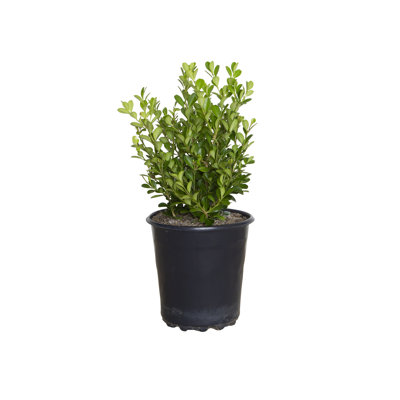
2.5 Qt. Japanese Boxwood - Evergreen Shrub for Full Sun to Part Shade
By Plants by Mail
Rated 5 out of 5 stars.7 total votes
Japanese Boxwood is an evergreen shrub with a tight growth habit and dense foliage. This Boxwood has become a landscape staple that lends form to any area. These plants are designed to be easy to grow and create an excellent medium hedge. Each plant produces bright green oval-shaped leaves that take pruning very well. This evergreen shrub can withstand various weather conditions; it can withstand cold temperatures and full direct sunlight. This buxus plant is hardy in USDA Zones 6-9 and can be planted in full sun to part shade. The Japanese Boxwood can reach up to 3-6 feet in height and 3-6 feet in width and is more durable than a typical common boxwood shrub. To ensure proper growth, ensure the plant is placed in a hole twice as wide as the pot, and mix rich garden soil with your native soil while watering twice a week. In the spring, use a slow-release granular fertilizer in addition to watering.
I bought nine. Eight are thriving and doing well. The other didn’t fare as well but I cut it way back and it’s showing signs of life. My soon to be hedge is looking good.. Teresa. US. Tue Jun 09 2026

2.5 Qt. Sky Pencil Japanese Holly - Evergreen Tall Slender Shrubs for Screening
By Plants by Mail
Rated 4.7 out of 5 stars.27 total votes
The Sky Pencil Japanese Holly is an elegant and versatile evergreen shrub that adds vertical interest and sophistication to any landscape. This exceptional Japanese holly variety, scientifically known as Ilex crenata 'Sky Pencil,' is celebrated for its narrow, columnar form and dense, dark green foliage. Sky Pencil Holly is an ideal choice for creating striking vertical accents in tight spaces, such as narrow borders, hedges, entryways, privacy screens, or as a dramatic focal point in containers. With its resilience to heat, drought, and urban conditions, this holly is a reliable and low-maintenance addition to gardens of all styles. Elevate your outdoor space with the sleek and modern beauty of Sky Pencil Holly. When planting Sky Pencil Hollies choose a full sun to partial shade, dig the hole twice as wide as the pot and mix rich garden soil in with your native soil, then leave the top of the root ball 1/2 inch above the ground level when filling the hole with soil. Use a slow-release granular fertilizer in Spring.
I love this sky pencil holly, came in healthy condition, and it has the most perfect spot for privacy, thank you!. Kathy Giovannoni. Port Angeles, WA. Mon Apr 15 2024

2.5 Qt. Star Jasmine - Live Vine Plant with White Fragrant Blooms
By Plants by Mail
Rated 4.4 out of 5 stars.89 total votes
Star Jasmine, also known as Trachelospermum Jasminoides, is a beautiful and fragrant evergreen vine native to Asia. It is a popular choice for gardeners and landscapers due to its fragrant white star-shaped flowers and glossy green foliage that can grow up to 20 feet long. This versatile vine can be grown as a ground cover, as a climber, or trained to grow on trellises, arbors, and fences. Star Jasmine is easy to care for and requires little maintenance, making it a great addition to any garden space. In addition to its aesthetic appeal, Star Jasmine is known for its sweet, aromatic fragrance filling the air in the evenings during the bloom season. The fragrant flowers attract pollinators such as bees and butterflies, making them an excellent choice for those looking to attract wildlife to their garden. Star Jasmine prefers well-drained soil and full sun to partial shade. Dig a hole twice the size of the root ball of your Star Jasmine. Gently remove the plant from its container and loosen any tangled roots. Place the plant in the hole and backfill it with soil, ensuring the top of the root ball is level with the surrounding soil. Water the plant thoroughly after planting and add a layer of mulch. Star Jasmine can grow as a vine and will need support to climb. You can provide a trellis or other support structure for the plant to climb on. Water your Star Jasmine regularly, especially during hot and dry weather. Once established, this vine is water-wise.
Came just as pictured and healthy. Anonymous. Sun May 03 2026

2.5 Qt. Yuletide Camellia Sasanqua - Fall Blooming Evergreen Shrub with Red Flowers
By Plants by Mail
Rated 5 out of 5 stars.3 total votes
Introducing Yuletide Camellia, a festive and enchanting flowering evergreen shrub that brings a splash of vibrant color to your winter landscape. This exceptional sasanqua camellia variety is celebrated for its profusion of fiery red blooms that appear from late fall through early winter, adding a touch of holiday cheer to your garden. Yuletide Camellia bushes feature glossy, dark green foliage and a compact, upright growth habit, making it an ideal choice for borders, hedges, or as a focal point in your garden. With its resilience to heat, and drought, this camellia shrub is a reliable and low-maintenance addition to gardens of all styles. Elevate your outdoor space with the festive beauty and timeless charm of Yuletide Camellia. When planting this red-blooming Camellia shrub, dig the hole twice as wide as the pot and mix rich garden soil in with your native soil, then leave the top of the root ball 0.5" above the ground level when filling the hole with soil. Use a slow-release granular fertilizer for Camellias in Spring, and place it in an area with acidic to slightly acidic soil that is exposed to partial or full sunshine. This Yuletide Camellia plant is not guaranteed to be in bloom on arrival.
Very good plant it is growing great. Susan. Kemah, TX. Fri Nov 15 2024

2.5 Qt. Ruby Loropetalum - Evergreen Flowering Shrub with Purple Foliage
By Plants by Mail
Rated 4.9 out of 5 stars.20 total votes
Ruby Loropetalum bushes produce pink ribbon flower clusters that open up throughout the year. In the spring, the blossoms are the most plentiful. The purple to burgundy leaves will add aesthetic character to any area of your yard. A Loropetalum plant needs a hole twice as wide as the pot. To ensure optimal growth, mix rich garden soil with your native soil, then leave the top of the root ball 0.5" above the ground level. Cover the area around the plant in mulch to retain moisture. Use a slow-release, granular fertilizer in the spring. To create a dramatic effect, position a few loropetalums in a group to make a border, hedge, or backdrop for other plants. This evergreen shrub reaches 4-6' tall by 4-6' wide. Keep it watered twice a week until it's established for best results.
Awesome price and looked healthy. They are growing extremely fast!. Anonymous. Memphis, TN. Sun Sep 29 2024

2.5 Qt. Blue Pacific Juniper - Low-growing Evergreen Shrub for Full Sun to Part Shade
By Plants by Mail
Rated 5 out of 5 stars.2 total votes
Blue Pacific Juniper is a dense low growing juniper groundcover. It has attractive blue-green foliage that spreads up to 7 feet wide at maturity. This groundcover juniper's spreading habit is best left unsheared. When planting this Blue Pacific, dig the hole twice as wide as the pot and mix rich garden soil in with your native soil, then leave the top of the root ball 1/2 inch above the ground level when filling the hole with soil. Use a slow-release granular fertilizer in spring. This juniper is significantly heat-tolerant and hardy in USDA Zones 5-9. You can plant in full sun to part sun for best results. Water twice weekly until it has established its root system.
The juniper arrived in very good shape. I am pleased.. Friedrich. Bernardsville, NJ. Sun Jan 29 2023

2.5 Qt. Wintergreen Boxwood - Evergreen Shrub for Full Sun to Part Shade
By Plants by Mail
Rated 5 out of 5 stars.6 total votes
Update your landscape with the Wintergreen Boxwood Korean Uniform Evergreen Shrub. This Buxus is a cold-hardy evergreen shrub with a compact and dense growth habit. You can use this boxwood plant as a foundation or hedge planting. Use it to define paths, add balance, or differentiate spaces within your garden. Plant multiple boxwoods to create a sense of unity and repetition in your landscape. This boxwood shrub reaches a mature height of up to 3-5' and a width of up to 3-5'. The foliage retains its color year-round and looks lovely in various landscape styles. Use a slow-release granular fertilizer in springtime for optimal results. It's suitable for USDA Zones 5 through 9 in areas of full sun to partial shade. Wintry weather may cause some bronzing of the foliage.
They came looking healthy let's hope that grow. Teresa. Westbury, NY. Sat Jun 07 2025

2.5 Qt. Foxtail Fern - Lush Perennial Plant for Shade to Part Sun
By Plants by Mail
Rated 4.1 out of 5 stars.7 total votes
Foxtail ferns (Asparagus densiflorus), also known as asparagus ferns, are semi-evergreen perennials with plumes of emerald green foliage. They have a clumping habit that reaches 2-3 feet high by 3 feet wide. They can be planted indoors and outdoors, preferring part shade outdoors and full sunny spots indoors. Gardeners commonly associate it with ferns because of its clumping habit and soft, green foliage, but the asparagus fern is a member of the lily family and is related to the asparagus vegetable. This plant is toxic to humans and pets. The Foxtail Fern produces produce fragrant tiny white flowers in the spring and red berries follow behind them. There is no guarantee that the flowers or red berries will appear yearly. Be careful, the red berries are toxic to humans if consumed, but birds will enjoy them. Foxtail Ferns grow best in part shade, allowing the perennial plants to grow lush habits and emerald green foliage. If planted in part sun, the foliage is lighter green. A fully mature plant averages 2-3 feet in height and 3 feet in width.
Beautiful and doubled in size in the first year!. Nikki. Kansas City, MO. Mon May 27 2024
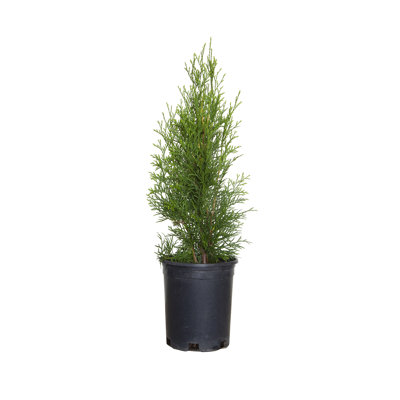
2.5 Qt. Emerald Green Arborvitae - Evergreen Trees for Privacy Screens
By Plants by Mail
Rated 5 out of 5 stars.3 total votes
The Thuja Emerald Green Arborvitae is a classic and versatile evergreen shrub that brings timeless beauty and privacy to your landscape. This exceptional arborvitae variety, scientifically known as Thuja occidentalis 'Emerald Green,' is celebrated for its dense, vibrant foliage and columnar growth habit. Emerald Green Arborvitae is an ideal choice for creating privacy screens, hedges, or as a focal point in your garden. With its tolerance to a variety of soil types and its resistance to deer, pollution, and pests, this arborvitae is a reliable and low-maintenance addition to gardens of all sizes. Elevate your outdoor space with the enduring charm and beauty of Thuja Emerald Green Arborvitae. When planting Emerald Green Thujas, dig the hole twice as wide as the pot and mix rich garden soil in with your native soil, then leave the top of the root ball 0.5" above the ground level when filling the hole with soil. Once established, they'll require little to no maintenance and will grow in a consistent symmetrical shape. Emerald Green Arborvitaes are suitable for use in USDA zones 4 through 8. Plant in full sun to part shade for best results.
It was quite dry before I put it in the ground, so I do recommend you get it out of the box in Quickly. .. Paul. Bronx, NY. Wed Jul 23 2025

2.5 Gal. Golden Mop False Cypress - Evergreen False Cypress Shrub with Yellow Folaige
By Plants by Mail
Rated 5 out of 5 stars.1 total vote
FREE Delivery
A truly stunning accent, fall in love with the Gold Mop False Cypress (Chamaecyparis). This beauty features string-like evergreen foliage that ranges from chartreuse green to golden yellow. It grows with a naturally mounding habit that hugs the ground and creates a cloud-like appearance in the landscape. At maturity, it reaches 2-3 ft. tall and 3-4 ft. W. Thanks to a slow-growth habit, maintenance is completely unnecessary. Use this variety as an accent or foundation plant in rock gardens or Asian-inspired landscapes. This Chamaecyparis is hardy from USDA Zones 4 to 8 and thrives in Full Sun. Plant in rich, slightly acidic soil with good drainage and water 2-3 times per week for the first growing season. Fertilize in spring with a slow-release nitrogen-rich fertilizer to promote plant growth. These Gold Mop False Cypresses are well-established in a 2.5 Gallon pot and will tend to range from 8 in. to 14 in. tall (foliage weeps over the side of the pot).
Looks great! Came in perfect condition.. Kartik. Jersey City, NJ. Sat May 06 2023
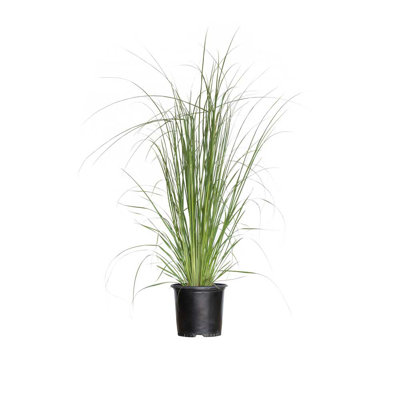
Pampas Grass (Cortaderia selloana) is a stunning and dramatic ornamental grass that can bring a touch of elegance and visual impact to your landscape. With its tall plumes of feathery, creamy-white or pink flowers and its fountain-like growth habit, Pampas Grass offers several compelling reasons to consider using it in your landscape design. It is relatively low-maintenance and can create a focal point or add texture and movement to your garden. One of the main reasons to choose Pampas Grass for your landscape is its striking appearance. The tall flower plumes can reach heights of 8 to 12 feet, creating a dramatic and eye-catching display. These plumes emerge in late summer and persist into winter, providing visual interest throughout the colder months. The feathery, airy texture of the flowers adds a unique element to your garden design. Pampas Grass is also valued for its versatility. It can be used as a focal point in a large open area or as a background plant to provide privacy or screen unwanted views. Its tall and fountain-like growth habit makes it suitable for creating natural barriers or adding vertical interest to your landscape. Pampas Grass can also be used in large containers to create a stunning display on patios or in outdoor living areas. Caring for Pampas Grass is relatively straightforward. It thrives in full sun, requiring at least 6 hours of direct sunlight per day for optimal growth and flowering. Pampas Grass is adaptable to a variety of soil types but prefers well-drained soil. It can tolerate sandy or clay soils but may benefit from amending the soil with organic matter to improve drainage. Watering requirements for Pampas Grass are moderate. Established plants are relatively drought-tolerant and can withstand dry conditions. However, regular watering during prolonged dry periods can help maintain its vigor and promote better flowering. Water deeply, allowing the soil to dry between waterings. Pruning Pampas Grass is essential for its overall health and appearance. In late winter or early spring, before new growth emerges, cut back the previous year's foliage to about 12 inches above the ground. Be cautious when handling the plant, as the leaves can be sharp. Removing the old foliage helps rejuvenate the plant, promotes new growth, and prevents it from becoming untidy or overgrown. Fertilization is generally not necessary for Pampas Grass. However, if desired, you can apply a balanced, slow-release fertilizer in spring to provide additional nutrients. Follow the manufacturer's instructions for application rates and methods. Avoid excessive fertilization, as it can lead to excessive foliage growth at the expense of flowering.
They have grown so much over the summer. Beautiful. Erin. Louisville, KY. Fri Dec 13 2024
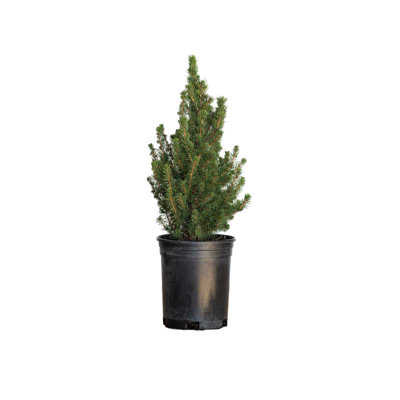
The Dwarf Alberta Spruce (Picea glauca 'Conica') is a slow-growing, compact evergreen conifer known for its dense, pyramidal form and fine, bright green needles. Its uniform shape and small stature make it a popular choice for adding structure and year-round color to landscapes. With its tight, conical growth habit, this dwarf spruce is often used in formal gardens, foundation plantings, and containers. It’s also a favorite during the holiday season as a living Christmas tree. This is a slow-growing conifer that will take 18+ years to reach its mature height, this slow growth habit makes this plant great for topiaries and container garden specimens that can be decorated during the holidays as a miniature Christmas tree. The Alberta Spruce should be planted in full to partial sun and should be watered 2-3 times per week until established, then water as needed in dry spells.
Tree arrived in great condition. I will plant after the holidays. Jacqueline. Exeter, RI. Wed Apr 16 2025

The Dwarf Burford Holly is a compact evergreen shrub that packs a punch of year-round beauty and structure into your landscape. This versatile holly variety is celebrated for its glossy, dark green foliage and abundant clusters of bright red berries. With a dense and mounding growth habit, the Dwarf Burford Holly is a perfect choice for small gardens, borders, or container plantings. Not only does it provide a classic and polished look, but it also attracts birds, adding a touch of wildlife to your outdoor space. Elevate your garden with the timeless charm and low-maintenance allure of the Dwarf Burford Holly. When planting this Holly shrub, dig the hole twice as wide as the pot and mix rich garden soil with your native soil. Then, leave the top of the root ball 1/2 in. above the ground level when filling the hole with soil. Use a slow-release granular fertilizer in Spring.
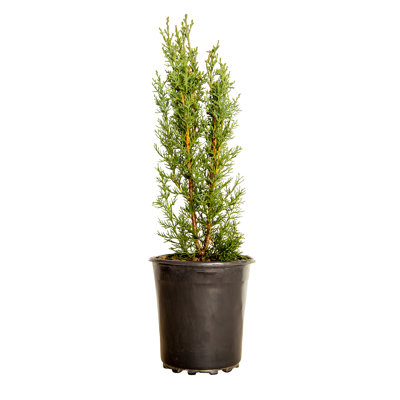
2.5 Quart Italian Cypress - Tall Skinny Evergreen Tress for Full Sun Landscapes
By Plants by Mail
Rated 4.8 out of 5 stars.5 total votes
The Italian cypress is guaranteed to bring your landscape to new heights of sophistication! Unlike most other cypresses, this type grows in a straight, upright column. Meanwhile, it features dark evergreen foliage that grows remarkably dense. The tall habit is perfect for a privacy screen. Although not as fast-growing as green giant arborvitae or Leyland cypress, this tree still grows 2-3 feet yearly in favorable conditions. Italian cypress is ideal for adding a stately appearance to your home. Columnar foliage tapers to a point at the top, creating a spear-like tip. Whether planted in a row or individually, you'll be surprised at the elegant Mediterranean flair they add to the landscape. Left untrimmed, this cypress will reach 30-40' H x 5' W. Therefore, leave some vertical space for it to grow. Alternatively, you can prune them to your desired height. There are numerous ways to use this classic selection. Line a long driveway, frame your home, add some interest next to a wall, or even use it in a planter! It won't let you down. This cypress features impressive frost-damage resistance as well.
My Italian Cypress trees are healthy and vibrant! They were packed very well and I planted them already, can't wait for them to grow.. James. Memphis, TN. Tue Apr 04 2023

Asiatic Jasmine is a versatile and lush ground cover vine that adds beauty and texture to any landscape. This exceptional jasmine variety, known scientifically as Trachelospermum asiaticum, is celebrated for its dense, glossy foliage and vigorous growth habit. Asiatic Jasmine vines form a thick carpet of evergreen leaves, making it an ideal choice for filling in bare spots, controlling erosion on slopes, or creating a low-maintenance green backdrop. With its resilience to heat, drought, and various soil types, this jasmine is a reliable and easy-to-grow addition to gardens of all styles. Elevate your outdoor space with the vibrant greenery and enduring charm of Asiatic Jasmine. When planting this Jasmine groundcover vine, dig the hole twice as wide as the pot and mix rich garden soil in with your native soil, then leave the top of the root ball a half inch above the ground level when filling the hole with soil. Use a slow-release granular fertilizer in Spring.

2.5 Quart Wavy Leaf Ligustrum Recurvifolia - Flowering Evergreen Shrub for Screens and Privacy Hedges
By Plants by Mail
Rated 5 out of 5 stars.2 total votes
Wavy Leaf Ligustrums are fast-growing hardy low maintenance evergreen shrubs that can be grown as a privacy hedge or can be trained or limbed out into a small tree. In spring, large clusters of tiny blooms adorn this evergreen shrub with flowers that are white, and fragrant. These ligustrum blooms stand out dramatically against the waxy curled dark green foliage. This is a very adaptable shrub with the ability to grow in a variety of soils, sunlight exposures, and can handle heavy pruning.
Plants arrived in great healthy shape.. Gardener. Haltom City, TX. Wed Apr 30 2025

2.5 Gal. Chinese Snowball Viburnum - Decidious Shrub with Large Hydrangea-like Blooms
By Plants by Mail
Rated 5 out of 5 stars.3 total votes
FREE Delivery
The Chinese Snowball Viburnum (Viburnum macrocephalum) is a stunning, deciduous shrub prized for its large, spherical clusters of pure white flowers that resemble hydrangea blooms. These "snowballs" can grow up to 8 inches in diameter, creating a breathtaking display in the spring. The plant features dark green foliage, and although it’s a deciduous shrub, it retains a semi-evergreen appearance in warmer climates. This viburnum adds a dramatic focal point to landscapes, often used as a standalone specimen, in hedges, or mass plantings.
had a few blooms first year it was in the ground. slow growth rate. was expecting it to be much taller than it is.. Sandhya. Sun Nov 23 2025
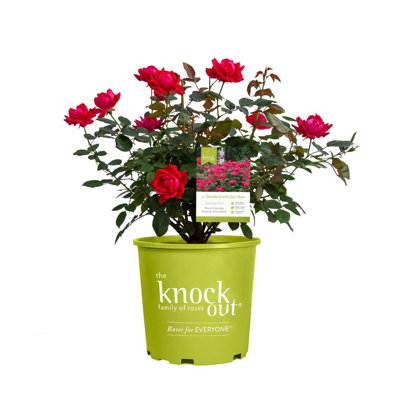
If like most EVERYONE, you are afraid of roses, you need to try the revolutionary Knock Out Family of Roses. These easy-to-grow shrub roses will reward you EVERYDAY with a season long show of blooms from spring to frost. With stunning colors to choose from, there are so many ways to enjoy Knock Out Roses EVERYWHERE in your garden. The most disease resistant roses on the market, Knock Out Roses are low-maintenance and versatile, making it easy to achieve stunning blooms year after year.
Christie. Olive Branch, MS. Sat Mar 22 2025